




Virology and Microbiology
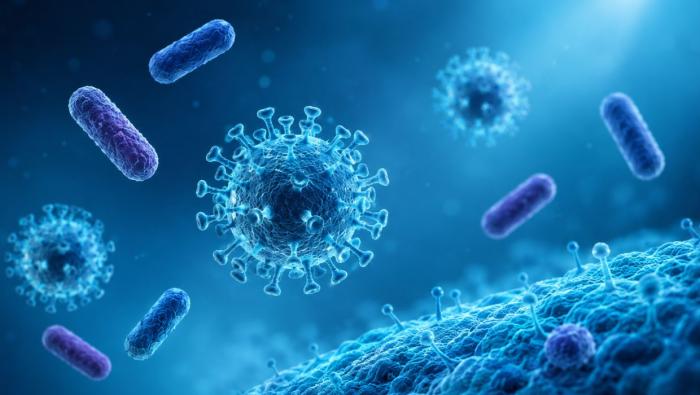
The mission: to understand the relationship between microorganisms and human health
The human body exists within a complex network of interactions with microorganisms, including viruses, bacteria, fungi, parasites, and other microscopic life forms. Some contribute to the development of disease, while others play essential roles in processes such as digestion, metabolism, immune function, and maintaining the body's biological balance.
In diseases caused by microorganisms, the same infectious agent can produce very different outcomes from one person to another. In one individual, an infection may resolve quickly; in another, it may lead to severe illness; and in a third, it may have long-lasting effects. These differences are influenced not only by the microorganism itself, but also by each person's unique characteristics, including age, genetic background, immune function, underlying medical conditions, medications, diet, and living environment.
The integration of virology, microbiology, and personalized medicine makes it possible to study the interaction between microorganisms and the human body with greater precision. Research in this field focuses not only on identifying the microorganism responsible for disease, but also on understanding how the body responds to it, what determines the severity of illness, and how diagnosis, treatment, and follow-up can be tailored to each individual patient.
What Are Microbiology and Virology?
Microbiology is the field of research devoted to microorganisms—microscopic organisms that can generally be seen only under a microscope or identified using molecular techniques. The field includes the study of bacteria, fungi, parasites, single-celled organisms, and viruses. Virology is the branch of microbiology that focuses specifically on viruses: their structure, how they enter cells, the way they replicate, and their effects on the human body.
Microorganisms can cause a wide range of diseases, including respiratory infections, gastrointestinal illnesses, liver disease, skin infections, sexually transmitted infections, chronic infections, and even certain types of cancer. At the same time, many of them are essential to normal human health. Gut bacteria, for example, help break down food, produce vital compounds, regulate the immune system, and, as explored in the the research of Professor Nissan Yissachar, may even be harnessed to produce therapeutic drugs.
To identify microorganisms and understand their effects on the human body, researchers now rely on tools such as genetic sequencing, molecular diagnostics, microbiome analysis, computational biology, artificial intelligence, and highly sensitive methods for measuring immune responses. Together, these technologies make it possible to identify disease-causing microorganisms more rapidly, track changes in microbial communities, better understand drug resistance, and detect early signs of disease risk or complications.
Virology and Microbiology in Personalized Medicine
Infectious diseases may appear similar, yet they can develop very differently from one patient to another. The same pathogen may cause a mild, short-lived infection in one person, severe illness in another, and long-term health effects in a third. Personalized medicine seeks to understand the reasons behind these differences and how they can inform diagnosis, treatment, and follow-up care.
To achieve this, researchers use advanced diagnostic technologies and sophisticated methods for analyzing biological data. Molecular tests, for example, can identify the disease-causing microorganism, determine its specific strain, estimate the extent of its presence in the body, and in some cases detect drug resistance. Immune and genetic markers provide additional insight into the body's response and can help identify patients who are at greater risk of developing complications.
Microbiome research is also an important part of this picture. The microbiome is the community of microorganisms that lives in the human body, primarily in the digestive tract. Its composition varies from person to person and is influenced by factors such as diet, age, medications and antibiotics, birth and breastfeeding, living environment, and underlying health conditions. Research has shown that the microbiome is closely linked to immune function, metabolism, inflammatory diseases, and responses to medical treatments.
By combining pathogen identification, an understanding of the body's immune response, and microbiome research, scientists can support more accurate diagnosis, better-informed treatment decisions, and follow-up care that is more closely tailored to each patient.
What Do We Study at the Dangoor Center at Bar-Ilan University?
At the Dangoor Center for Personalized Medicine at Bar-Ilan University, researchers study virology and microbiology from multiple perspectives, including the rapid identification of disease-causing microorganisms, the long-term effects of viral infections, microbiome research, and the complex interactions between bacteria, viruses, and the human body.
The Long-Term Effects of Viral Infections: Professor Meital Gal-Tanamy's laboratory investigates how viral infections can leave lasting changes in the body. One of the lab's main areas of research is hepatitis C virus (HCV), which can lead to chronic liver disease and liver cancer. This work also addresses a broader question: how viral infections continue to affect the body long after the initial infection has resolved, including in conditions such as long COVID.
The Link Between the Microbiome and Human Health: Professor Omry Koren studies the communities of bacteria that live in the human body and their role in health and disease. His research focuses, among other areas, on the microbiome in early life, the effects of antibiotics on gut bacteria, and the connections between the microbiota and growth, immune function, behavior, and a wide range of medical conditions.
Rapid Detection of Disease-Causing Microorganisms: Professor Amos Danielli develops highly sensitive technologies for detecting biomarkers and disease-causing microorganisms. In the field of infectious diseases, his research group is developing rapid, highly sensitive diagnostic approaches for viruses such as Zika, dengue, and West Nile virus, including technologies based on magnetic particles.
Viruses That Infect Bacteria:Dr. Yishay Pinto studies the human virome and bacteriophages—viruses that infect bacteria. His research focuses on developing computational tools to map viruses within the microbiome and investigating the relationships between bacteria, viruses, and medical conditions such as gestational diabetes.
Translational Research and Multidisciplinary Collaboration
Virology and microbiology sit at the intersection of laboratory research, clinical medicine, and public health. Understanding an infectious disease or changes in the microbiome requires identifying the microorganism involved, understanding the body's response to it, and integrating that information with clinical data and each patient's individual characteristics.
At the Dangoor Center, this integration is reflected in collaborations among laboratory scientists, physicians, and engineers. By bringing these disciplines together, researchers can develop tools that begin with fundamental discoveries—such as identifying the mechanisms of a virus, bacterium, or the microbiome—and ultimately support faster diagnosis, more precise monitoring, and better-tailored treatments.