



Nanomedicine and Advanced Diagnostics
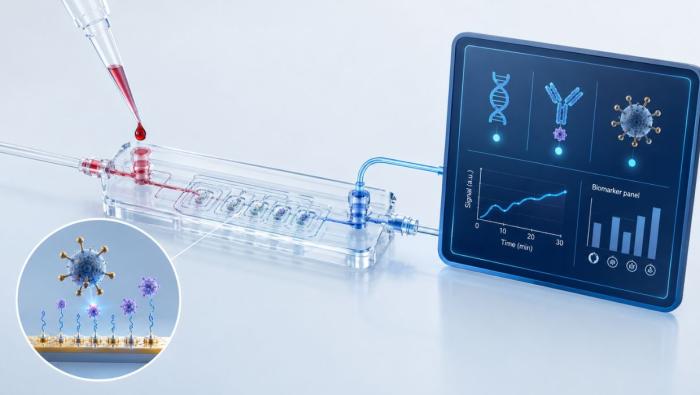
The Mission: Detecting Disease Earlier and with Greater Precision
For many years, medical diagnosis relied primarily on clinical signs, laboratory tests, and medical imaging. Yet many diseases begin long before they are felt in the body or detected through conventional testing. Often, the earliest changes occur on an extremely small scale, in molecules, cells, proteins, genetic material, or subtle chemical signals. Nanomedicine and advanced diagnostics aim to intervene at precisely this stage: identifying early biological changes as soon as possible and extracting meaningful medical insights from them.
What Is Nanomedicine and Advanced Diagnostics?
Nanomedicine involves the use of extremely small materials and particles, measured on the nanometer scale, for medical applications. Because of their minute size, nanoparticles can move through the body's biological environment in ways that conventional materials cannot. They can cross cellular barriers, bind to specific molecules, or accumulate in tissues with unique characteristics. In addition, these particles often possess distinctive physical and chemical properties, such as unique responses to light, magnetic fields, or changes in acidity, that can be harnessed to dramatically improve diagnostic tests and medical imaging.
Think of nanoparticles as microscopic beacons that illuminate biological activity inside the body. If the body is a vast, dark landscape and the earliest stage of disease is a small object hidden within it, conventional diagnostic tools are like a spotlight shining from the outside, struggling to see into the smallest crevices. Nanoparticles, by contrast, act like thousands of intelligent lights that flow directly into those crevices, attach themselves exclusively to the target of interest, and illuminate it from within. In this way, they transform a hidden biological process into a clear signal that can be measured and analyzed.
In advanced diagnostics, these properties are used to develop tools that can detect early signs of disease and provide more precise information about what is happening in the body. For example, a nanoparticle may serve as a contrast agent in medical imaging, highlight suspicious tissue, bind to a specific biomarker, or enable highly sensitive measurement of changes occurring in cells and tissues. In this way, a biological process that is difficult to detect with conventional testing can be transformed into a signal that can be measured and analyzed.
This field also encompasses advanced sensors, molecular testing, noninvasive measurement techniques, systems for detecting biomarkers, and data analysis using algorithms and artificial intelligence. The shared goal is to obtain a more accurate picture of a patient's condition, from changes at the cellular and tissue levels to the body's response to treatment.
The connection between nanomedicine and advanced diagnostics is particularly important because early and accurate diagnosis can change the course of a disease. The earlier a disease process is identified, the greater the opportunity to intervene before significant damage occurs, select a more appropriate treatment, monitor its effectiveness, and avoid treatments that are unlikely to be beneficial.
Nanomedicine and Advanced Diagnostics in Personalized Medicine
Personalized medicine seeks to tailor diagnosis and treatment to the biological characteristics of each patient. To do so, it is necessary to understand what characterizes the disease in a particular individual: which processes are active in the tissue, which biomarkers are present, and what factors may influence the response to treatment.
This is where nanomedicine and advanced diagnostics come into the picture. The tools developed in this field make it possible to measure biological processes with greater sensitivity and identify subtle differences between patients who may appear clinically similar. In diseases such as cancer, inflammatory diseases, metabolic disorders, and neurodegenerative diseases, these differences can be significant. The same diagnosis may stem from different underlying mechanisms and therefore require a different therapeutic approach.
The information obtained from advanced diagnostic tests can help classify a disease more accurately, monitor its progression, and assess the response to treatment. It can also indicate early signs of worsening disease or treatment resistance, even before changes become apparent in symptoms or are detected through conventional measures.
In this sense, nanomedicine and advanced diagnostics are part of the foundation of personalized medicine. They help translate subtle biological information into more precise medical decisions: which treatment to choose, when to modify it, and how to monitor its effects over time.
What Do We Study at the Dangoor Center at Bar-Ilan University?
At the Dangoor Center for Personalized Medicine at Bar-Ilan University, researchers develop advanced tools for diagnosing, imaging, and monitoring biological processes. Research in this field brings together nanotechnology, biomedical engineering, chemistry, physics, biology, data science, and medicine, with the goal of improving our ability to detect diseases and tailor treatments more precisely:
Integrated Medical Imaging (CT and MRI): Research led by Prof. Rachela Popovtzer focuses on improving medical imaging through the use of nanoparticles. The group has developed tiny particles with an iron oxide core and a gold coating that can serve as a contrast agent in both CT and MRI scans. This makes it possible to obtain complementary information from two different imaging modalities and achieve a clearer view of the tumor and the blood vessels surrounding it.
Fluorescent Monitoring of Cellular Processes: Prof. Dror Fixler and his research group are developing nanomaterials that enable fluorescent labeling, the use of luminescent substances to track processes within cells. Their research has led to the development of tiny carbon dots combined with gold nanoparticles. These materials can enter cells, bind to DNA, and detect changes in cellular acidity levels. As a result, they may serve as a highly sensitive tool for monitoring cellular processes and identifying changes that are difficult to measure using conventional methods.
Molecular Machines and Theranostics: Another research direction is led by Dr. Abed Saady and focuses on the development of “molecular machines,” engineered molecules designed to respond to specific biological conditions. Dr. Saady is developing smart materials that can carry a drug and release it only when they detect characteristics of the target tissue, such as a particular acidity level or the activity of a specific enzyme. This approach belongs to the field of theranostics, which combines diagnosis and treatment within a single system. The material can both act within diseased tissue and help monitor its location and activity.
These three research directions demonstrate the contribution of nanomedicine to advanced diagnostics: improving imaging quality, enabling sensitive monitoring of cellular processes, and developing smart systems that can integrate detection, treatment, and monitoring.
Applied Research and Multidisciplinary Collaboration
Nanomedicine and advanced diagnostics are fields that require close integration between the laboratory and the clinic. Before a particle, sensor, or molecular system can become a medical tool, researchers must evaluate how it functions in cells and tissues, assess its safety, and determine how it can be incorporated into diagnosis, imaging, or treatment.
The Dangoor Center promotes collaboration among researchers from different disciplines and bridges basic research with questions that arise in clinical practice. One example is Dr. Abed Saady’s collaboration with the nuclear medicine unit at Sheba Medical Center, which helps explore how molecular machines could be integrated in the future into diagnosis, imaging, and treatment.
This approach makes it possible to connect biological markers with clinical data and develop tools that can help detect disease earlier, monitor treatment response, and tailor more precise treatments for each patient.