

Neurodegenerative Diseases of the Brain and Nervous System
The Mission: Detecting the Processes That Gradually Weaken the Brain
The human brain is made up of a dense network of nerve cells that communicate with one another through electrical and chemical signals. This communication creates coordinated activity across different regions of the brain, enabling cognitive and motor functions such as information processing, memory, movement, and speech.
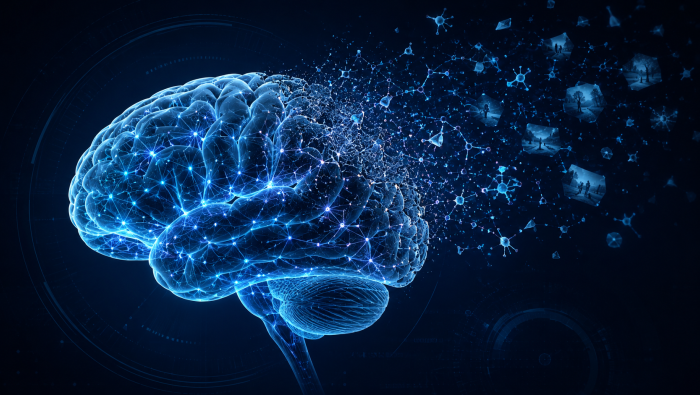
In neurodegenerative diseases, this network gradually deteriorates. Nerve cells lose their ability to function, the connections between them weaken, and communication between different regions of the brain becomes less efficient.
The nervous system can be compared to a global communications network or the internet. When the network is functioning properly, information flows between continents and cities at remarkable speed and in perfect synchronization. A neurodegenerative disease is like a series of silent infrastructure failures: first, a few tiny undersea cables begin to deteriorate; then the signal within the network hubs weakens; eventually, entire regions become disconnected from the network and lose the ability to communicate with one another.
In some neurodegenerative diseases, damage begins to develop long before clear symptoms appear. As a result, one of the field's greatest challenges is to identify the disease as early as possible—when changes in the brain have already begun, but functional impairment is not yet apparent. Early detection can support more accurate diagnosis, monitoring of disease progression, and the selection of appropriate medical treatment where one is available.
At the Dangoor Center, neurodegenerative diseases are studied through the lens of personalized medicine, exploring how each individual's genetic, biological, and clinical background may influence the onset of disease, its rate of progression, and the possibility of detecting it at an earlier stage.
What Are Neurodegenerative Diseases of the Brain?
Neurodegenerative diseases of the brain are a group of disorders in which nerve cells in the brain or nervous system become damaged. This damage can lead to memory decline, difficulty finding words, changes in behavior, movement disorders, muscle weakness, impaired balance, or a combination of several of these symptoms. These diseases develop gradually and tend to worsen over time.
The best-known examples include Alzheimer's disease, Parkinson's disease, ALS, Huntington's disease, and various forms of dementia. Each disease has its own characteristics, and the risk factors also vary from one condition to another. In some diseases, the risk increases with age, while in others, genetic background, overall health, and lifestyle may also influence both the likelihood of developing the disease and the age at which symptoms first appear. The underlying process of damage can also differ. In some cases, it is linked to changes within the nerve cells themselves, while in others it is related to the environment in which they function: for example, the accumulation of proteins that interfere with cellular function, difficulty producing the energy the cells require, a prolonged immune response, or the weakening of connections between nerve cells.
Neurodegenerative Diseases and Personalized Medicine
Neurodegenerative diseases may appear similar on the surface while arising from very different underlying processes. Likewise, two people with the same diagnosis may experience entirely different courses of disease. This understanding lies at the heart of personalized medicine in this field: the goal is to understand what characterizes the disease in a particular individual, not simply which broad diagnostic category it falls into.
In the past, diagnosis relied primarily on symptoms that had already appeared—for example, changes in memory, movement, speech, or behavior. Today, a broader approach is emerging that seeks to integrate biological, genetic, imaging, and functional information. Such information can help identify disease at an earlier stage, improve understanding of the underlying mechanisms involved, and distinguish between conditions that may appear similar on an initial evaluation.
In neurodegenerative diseases, this information can change how the disease is understood over time. It makes it possible to determine whether the disease is progressing more slowly or more rapidly, which systems are involved, and how similar or different it is from other cases with the same diagnosis. In this way, personalized medicine helps transform a broad diagnosis into a more precise understanding of an individual patient's condition, ultimately enabling more tailored clinical monitoring and medical treatment.
What Are We Studying at the Dangoor Center at Bar-Ilan University?
Researchers at the Dangoor Center for Personalized Medicine at Bar-Ilan University study neurodegenerative diseases from multiple perspectives—including biological, immunological, genetic, computational, and clinical approaches. The goal is to gain a deeper understanding of disease mechanisms, identify early signs of disease, and establish a more precise foundation for diagnosis and monitoring.
The immune system and the brain: Prof. Eitan Okun studies how immune processes may contribute to cognitive decline and Alzheimer's disease by investigating the interface between the immune system and the brain.
Rare neurodegenerative diseases: Dr. Ronit Ilouz leads research focused on rare neurodegenerative diseases, which can provide broader insights into the mechanisms underlying brain damage. The research conducted by Dr. Ilouz and her colleagues is helping to explain how a relatively small molecular change can lead to widespread neurological deterioration.
Early detection through language and speech: Dr. Galit Agmon is developing computational neurolinguistic measures designed to detect subtle changes in language structure, speech, and voice as potential indicators of brain aging and the development of neurodegenerative diseases, in combination with computational biology tools.
The connection between sleep and brain health: Prof. Lior Appelbaum studies sleep disorders and neurology, investigating the neural and cellular mechanisms underlying sleep and brain function. These studies provide another perspective for understanding the processes that may contribute to the decline of brain function.
Translational Research and Multidisciplinary Collaboration
Research on neurodegenerative diseases requires a broad perspective: understanding what goes wrong in the brain, how those changes develop over time, and how they manifest in each individual. Achieving this requires integrating biological research, clinical knowledge, and advanced data analysis tools.
At the Dangoor Center, researchers focus on bridging scientific understanding with future clinical applications. Research in this field explores how insights into disease mechanisms can support the development of methods for earlier diagnosis, more precise monitoring, and more personalized treatment. In this way, discoveries that begin in the laboratory or through data analysis can ultimately gain practical significance for physicians and patients alike.