



Metabolism
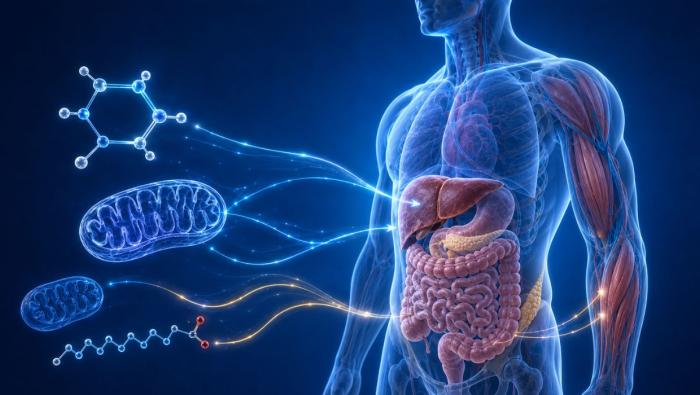
The Mission: Understanding the Energy System That Powers the Body
For many years, metabolism was commonly understood in the simple sense of "burning calories"—the process associated with weight gain or weight loss. Today, however, it is clear that metabolism is far more complex. It is an intricate network of biochemical processes that enables cells to generate energy, synthesize new molecules, break down components that are no longer needed, respond to stress, and adapt to a changing environment.
By studying metabolism, scientists can gain a deeper understanding of the body's fundamental mechanisms: why one person develops diabetes, another an inflammatory disease or cancer, and why patients with the same diagnosis may respond differently to the same treatment.
What Is Metabolism?
Metabolism is the collection of processes that enables the body to produce and use energy to power its cells, build new molecules, repair damage, and maintain internal balance. Most of the body's energy comes from food, but it can also draw on internal reserves, such as sugar stored in the liver and muscles or fat stored in body tissues.
Metabolism can be compared to a sophisticated city management system. Food is the raw material entering the city, blood vessels are the transportation routes and main highways, cells are the local factories, and energy is the electrical grid that powers everything. When the system functions properly, every cell receives exactly what it needs, at the right time and in the right amount. But when a disruption occurs in supply, processing, or the regulatory systems, disease can develop.
Glucose provides a good example of how the body produces and uses energy. After a meal, glucose is absorbed from the digestive system into the bloodstream and then delivered to the cells. Inside the cell, it is broken down in stages: first, a small amount of readily available energy is generated, and later, with the help of the mitochondria, much larger amounts of energy can be produced. When the body has more glucose than it needs at that moment, some of it is stored in the liver and muscles as glycogen, while some of the excess energy can be converted into fat and stored for future use.
In addition to producing energy, the metabolic system also serves as a highly sensitive sensor that helps the body detect its condition and respond accordingly. When levels of glucose, fats, amino acids, or hormones change, cells receive information about what is happening in the body: whether there are sufficient nutrients available, whether tissues need to be repaired, whether inflammation is present, or whether it is preferable to slow activity and conserve energy. These metabolic processes determine the cell's most fundamental decisions—when to grow, when to divide, when to repair damage, and when to reduce its activity.
Metabolism and Personalized Medicine
The close relationship between metabolism and personalized medicine is particularly evident in many diseases, because the same clinical diagnosis in different patients may arise from entirely different biological mechanisms.
In diabetes: High blood glucose levels are only the visible end result. They may be caused by the pancreas's inability to produce enough insulin, reduced sensitivity of muscle and fat tissue to insulin, changes in liver function, or a combination of several of these factors. Identifying the underlying cause of the disruption can help tailor treatment and follow-up to the individual patient.
In cancer: Metabolic changes are a central feature of the disease's behavior. Cancer cells often alter the way they take up glucose, produce energy, and use molecular building blocks in order to support rapid growth and survival. These changes also affect the tumor microenvironment and the activity of the immune system, and may therefore play an important role in selecting treatment strategies.
In chronic and degenerative diseases: In conditions such as fatty liver disease, obesity, cardiovascular disease, and neurodegenerative diseases, metabolic dysfunction is reflected in a broad network of interconnected processes, including glucose regulation, fat breakdown and storage, inflammatory processes, hormonal activity, and mitochondrial function.
The study of metabolism makes it possible to identify precisely where the imbalance arises in each individual patient, enabling the targeted personalization of drug therapy, nutrition, clinical follow-up, and the lifestyle changes required.
What Are We Studying at the Dangoor Center at Bar-Ilan University?
At the Dangoor Center for Personalized Medicine at Bar-Ilan University, researchers investigate how metabolic processes influence the development of disease, the body's response to treatment, and the biological differences between individuals.
The metabolism of the immune system in cancer: One of the Center's research directions focuses on improving the ability of the immune system to fight cancer. In the research led by Professor Cyrille Cohen and his colleagues, scientists are investigating how altering the metabolism of T cells—immune cells that recognize and attack abnormal cells—can enhance their ability to fight tumors. The underlying idea is that these cells require large amounts of energy to identify cancer cells, attack them, and continue functioning over time. Improving their ability to generate energy may therefore help them combat tumors more effectively.
Mathematical models for glucose regulation: Another area of research at the Center focuses on diabetes and the regulation of pancreatic beta cells. Dr. Ron Piran is developing mathematical models to better understand the conditions required for the regeneration of beta cells—the cells responsible for secreting insulin. These models make it possible to investigate how pancreatic cells are formed and differentiate, and how the body's glucose regulation system may one day be improved.
Investigating metabolic health disparities in the Galilee: Alongside molecular research, Dr. Sivan Spitzer-Shohat studies health disparities related to diabetes in the Galilee. Her research examines how metabolic disease is influenced not only by biological mechanisms but also by factors such as the living environment, socioeconomic status, and access to healthcare. In doing so, it broadens the concept of personalized medicine beyond molecular mechanisms to include the living conditions that influence disease prevention, disease management, and patients' adherence to treatment.
Advanced monitoring technologies and artificial intelligence: The Center is advancing the development of sophisticated measurement technologies and data analysis methods to better understand metabolism at the individual level and over time. A prominent example is research led by Prof. Zeev Zalevsky, in which a novel, noninvasive method was developed for measuring blood glucose levels by combining laser technology, magnetic fields, computational biology, and artificial intelligence. These technological approaches may one day enable convenient, continuous, and accurate monitoring of metabolic markers, helping to detect abnormalities early, before they require medical intervention.
Translational Research and Multidisciplinary Collaboration
Advancing personalized medicine in the field of metabolism requires bridging the knowledge generated in the laboratory with the data, technologies, and questions that arise in clinical practice. This integration makes it possible to better understand the underlying causes of metabolic dysfunction and to explore how it can be detected earlier or influenced through personalized treatment.
The Dangoor Center operates at this intersection, fostering connections between research and clinically relevant medical questions. Its collaboration with the Sheba Medical Center, for example, links research laboratories at Bar-Ilan University with a clinical environment, making it possible to study biological processes in a medical setting that is more closely connected to patient care.
By combining these complementary strengths, researchers can integrate molecular mechanisms, biological markers, and real-world clinical data, bringing the field one step closer to its goal: delivering precise, appropriate, and personalized treatment for every patient.