


One Diagnosis, Different Mechanisms: The Path to More Precise Autism Treatment

Autism presents differently in every person. Professor Evan Elliott studies how the microbiome, the immune system, and connections between nerve cells may explain these differences and pave the way for personalized treatment.
Autism is an umbrella term for a broad spectrum of conditions that can manifest in very different ways. For one person, the main difficulty may be social communication; for another, sensitivity to noise or sleep problems may be more prominent; while a third may primarily experience gastrointestinal problems. Although they all share the same diagnosis, their difficulties may stem from very different biological mechanisms. For Prof. Evan Elliott, these differences are the starting point for a new understanding of autism and the possibility of tailoring a more precise approach to each person.
Prof. Elliott is a brain researcher at Bar-Ilan University’s Azrieli Faculty of Medicine and a researcher at the Dangoor Center for Personalized Medicine. In his lab, he studies the molecular mechanisms involved in the development of autism, focusing, among other things, on the relationship between the gut microbiome, the immune system, and brain development. “Autism is a very broad umbrella,” he explains. “To tailor more precise treatment to each person, we need to identify the subgroups within it and understand which biological mechanisms are at work in each one.”
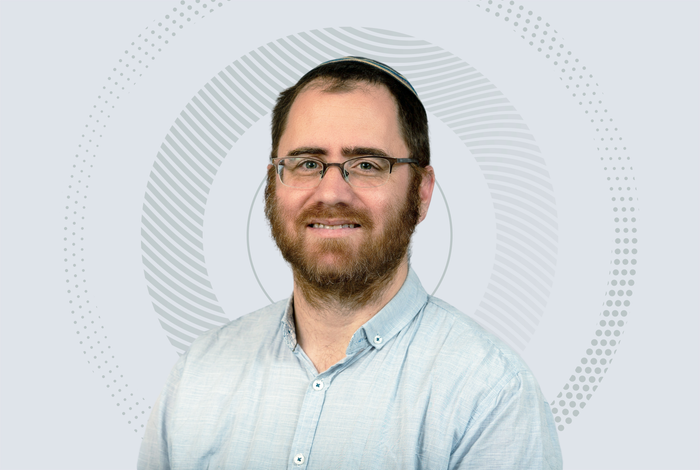 “Autism is a very broad umbrella.” Professor Evan Elliott
Breaking Down the Spectrum: Autism Subgroups
A diagnosis of autism spectrum disorder now encompasses a broad range of conditions, some of which were previously defined as separate diagnoses, such as Asperger syndrome. As a result, people whose autism manifests in very different ways receive the same diagnosis. “The broad definition makes diagnosis easier, but makes things more difficult when it comes to treatment,” says Prof. Elliott. To tailor treatment to different needs, he aims to identify subgroups within the spectrum that share similar biological characteristics.
Why is it important to identify subgroups within the autism spectrum?
“When we want to provide a particular treatment, whether behavioral or drug-based, we generally first need to define the subgroup for which it may be appropriate. We can think about breast cancer: after a woman is diagnosed, she undergoes genetic testing, a specific genetic change is identified, and treatment is tailored accordingly. In the field of neurodevelopment, and autism in particular, this capability is still largely lacking.
“We’re trying to understand which biological subgroups exist within the broad framework of autism. In some people, we see increased connectivity or activity in certain areas of the brain. In others, there are changes in the body’s immune response and in immune system molecules in the brain. In one person, we may find only one of these changes, while in another, we may find a combination of several changes. If we can identify the mechanism at work in each person, we can consider how to treat them using behavioral or medical approaches.”
How can biological subgroups be identified?
“Some families participate in our research program and provide various samples, including blood and stool samples. In these samples, we examine many factors: immune system activity, the gut microbiome, metabolites found in the blood, and more. We then analyze all the information together and try to identify groups with different biological patterns.
“For example, we may discover that some people with autism have particularly high levels of immune activity, while another group has a particular pattern in the composition of their gut bacteria. Once we identify subgroups like these, we can examine whether they are associated with certain behavioral characteristics, factors that arose during pregnancy, or genetic changes. Connecting these data points may help us understand why autism manifests differently in each person.”
Will it be possible to diagnose autism with a blood test in the future?
“Today, there is no biological test that can diagnose autism because it’s difficult to identify a single marker that is shared by everyone. Even in the future, we probably won’t be able to determine from a blood sample whether a person is on the spectrum. Autism is diagnosed based on clinical and behavioral characteristics, so the purpose of biological information is to help with the next stage: identifying the mechanisms associated with a person’s difficulties and tailoring treatment accordingly.”
Seeing the Full Picture: How Does Autism Develop and Manifest?
The search for more precise autism treatment requires broadening our perspective in two directions. The first is to determine which factors contribute to the development of autism, and the second is to understand which difficulties actually affect each person’s life, even if they aren’t central to the diagnosis. “We need to look at autism as a condition that affects the entire body and ask what needs to be treated in each person,” says Prof. Elliott.
What is known about the factors involved in the development of autism?
“The data clearly show that genetics plays a major role. However, genetics doesn’t provide the whole explanation, as demonstrated by cases of identical twins where one has autism and the other doesn’t. We therefore need to study the interactions between genetics and other factors. This is a very complex field of research that requires large datasets to conduct precise statistical analyses.”
What other factors may influence brain development?
“Studies have found an association between advanced paternal age and an increased likelihood of autism. One hypothesis is that more new mutations occur in the sperm cells of older men. Significant activation of the immune system during pregnancy may also be associated with changes in the course of brain development. However, it’s important to remember that a statistical association doesn’t prove causation. There may, for example, be a genetic predisposition that requires an additional factor to influence the course of development.”
What does most autism research focus on?
“For understandable reasons, autism research focuses on social behavior and repetitive behaviors. But for some people, the most significant difficulty is actually sensory sensitivity. Even if it isn’t the main characteristic on which the diagnosis is based, it may be the issue that needs to be addressed in order to help that person. That’s why it’s important for research to also examine the additional difficulties associated with autism and the biological mechanisms behind them.”
Why is it important to also consider symptoms that aren’t central to the diagnosis?
“I know a young girl with autism who didn’t speak and had severe sleep difficulties. For about a year, no one understood why she was unable to sleep, until it was discovered that she was experiencing reflux at night. Once the problem was treated, her sleep improved, as did other aspects of her daily life. The reflux may not initially have seemed like a central aspect of her autism, but in practice it had a broad impact. This is an example of why it’s important to look at the whole person and identify the specific problem affecting their quality of life.”
 Autism research focuses on social behavior, but that isn’t always the difficulty that needs to be addressed
From the Microbiome to the Immune System: The Path to Personalized Autism Treatment
One of the main areas of research in Prof. Elliott’s lab focuses on the relationship between autism and the microbiome, the population of bacteria and other microorganisms that live in the body, primarily in the gut. Changes in the composition of gut bacteria have been found in some children with autism, but it’s still unclear whether they play a role in the development of autism or arise as a result of it. Elliott is working to determine the direction of this relationship and examine how the microbiome may affect the immune system, brain development, and behavior.
What did you find in the microbiome of children with autism?
“In a study we conducted with families in Israel, we examined various factors in the body, including metabolites, the immune system, and the microbiome. In some of the children with autism, we found higher levels of certain gut bacteria. This finding alone can’t tell us whether the change in the microbiome affects the development of autism or occurs as a result of it.
“To investigate a causal relationship, we transferred the microbiome we found in the children to mice on the day they were born. This allowed us to track its effects throughout development. We later observed changes in the mice’s immune response in the brain, as well as in their behavior. These findings raise the possibility that the microbiome plays an active role in the process.”
How might gut bacteria affect brain development?
“One possibility we’re investigating involves microglia, immune cells that function in the brain. In the mice that received the microbiome from children with autism, we found a decrease in the number of these cells, as well as changes in their structure.
“During brain development, microglia remove synapses that are no longer needed. Synapses are the points of connection between nerve cells, and their removal helps shape the brain. We hypothesize that the changes in microglia disrupt this process, causing too many synapses to remain in the brain. This may increase electrical activity and ultimately affect behavior as well. We’re now testing whether this hypothesis is correct.”
Does this change occur in everyone with autism?
“No. We found this change in the microbiome in only some people with autism. In this group, it may affect microglia and brain development, while different biological mechanisms may be at work in other groups.
“To identify these groups, we combine data on the microbiome, the immune system, and metabolites in the blood with information about genetics, pregnancy, diet, and behavior. The goal is to determine whether a particular biological pattern is also associated with a specific difficulty, such as sensory sensitivity. This could eventually allow us to explore treatments tailored to the biological mechanism and symptoms of each group.”
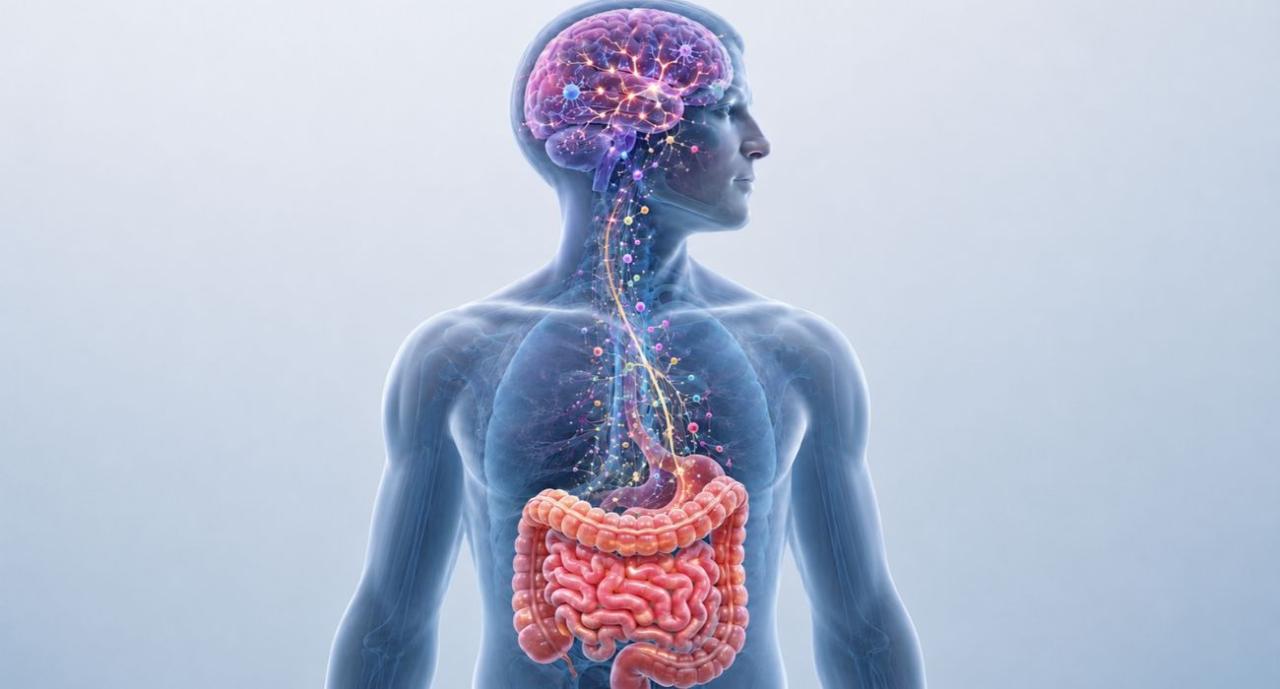 Gut bacteria may affect the brain, and perhaps the development of autism as well
Beyond the Diagnosis: What Does Successful Autism Treatment Look Like?
Prof. Evan Elliott’s research aims to lay the groundwork for treatments that focus on each person’s specific biological mechanisms and difficulties. Even when it isn’t possible to alter the entire course of development, reducing sensory sensitivity, improving sleep, or treating a physical symptom can have a significant impact on the quality of life of people with autism.
How much does the timing of diagnosis affect treatment options?
“Autism is usually diagnosed around the age of three, depending on the severity of the characteristics. Early intervention may make broader changes possible, but specific difficulties can also be treated later in life. We may not be able to alter the entire course of development, but improvements in sensory sensitivity, sleep, or behavior can be very significant.”
How is success in autism treatment defined?
“People generally seek a diagnosis because there is a particular difficulty they want to understand or improve. Success should therefore be measured by the change that matters to the person. Our goal is to help specific people with specific problems so they can achieve a better outcome, as they themselves define it.
“For many people with autism, social difficulties aren’t the first thing they would want to change. Sometimes sensory sensitivity, sleep problems, or another symptom has a greater impact on their quality of life. In my view, these are the difficulties that treatment and research should focus on.”
How do you expect autism research to develop in the coming years?
“I think that in five years, we’ll have a better understanding of the relationship between biology and the different symptoms, as well as the factors that lead to different trajectories of brain development. We already have technologies that are enabling progress in this direction.
“Translating this biological knowledge into clinical treatment will take more time. Clinicians will need to evaluate the findings and determine how they can be applied rigorously. But I believe we’ll gain a much deeper understanding of the relationship between biological mechanisms and the way autism manifests in each person.”
Last Updated Date : 11/10/2026