Who Gets Vaccinated More? How Public Health Affects Us All
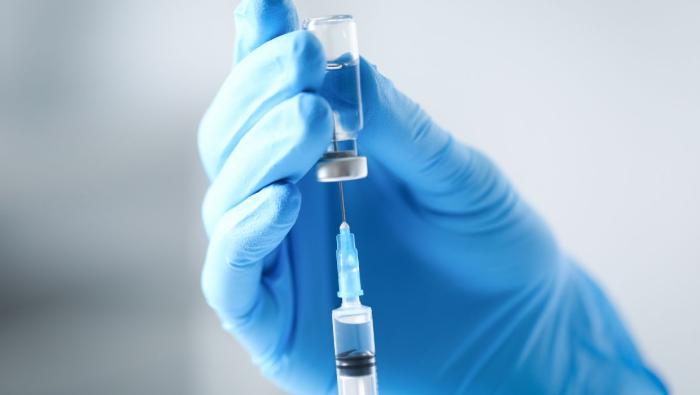
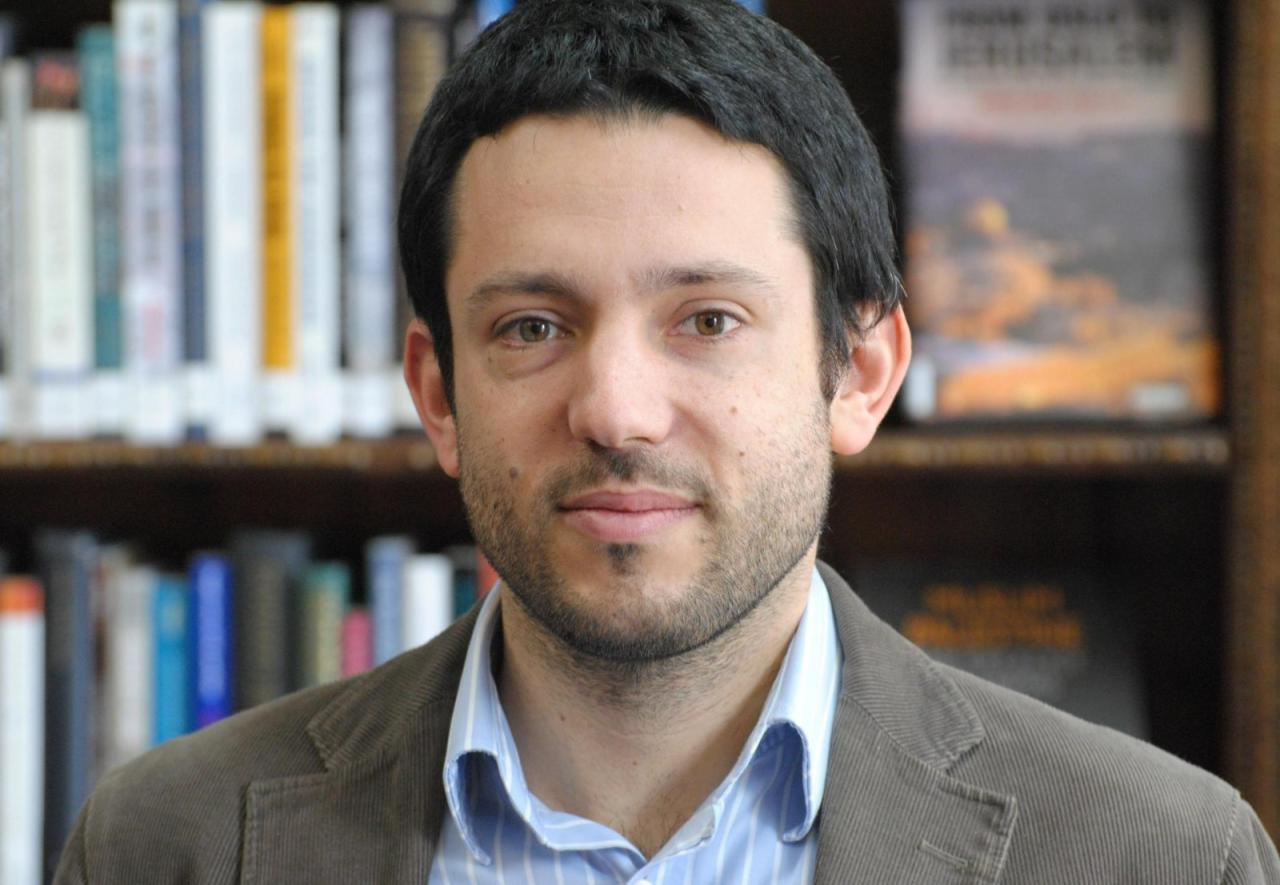
How can diseases be prevented before outbreaks occur? This question is the focus of the research conducted by Prof. Michael Edelstein, a public health expert. In this interview, he explains why cultural familiarity and trust within a community are just as important as access to medical care, and how the effective use of data can help the healthcare system reach different populations.
While he was a medical student, Prof. Michael Edelstein worked in the obstetrics and gynecology department of a rural hospital in Bangladesh. There, he met women who arrived at the hospital only after their pregnancies had already become complicated, facing complex medical conditions and a real risk to both themselves and their unborn children. "When I saw these women, it was clear to me that care couldn't begin only when they arrived at the hospital," he recalls. "You have to look at the entire system and ask what can be done earlier to prevent them from reaching that point."
This experience introduced Edelstein to the field of public health, which he continues to work in today. Prof. Edelstein is a physician and public health researcher at the Faculty of Medicine of Bar-Ilan University in Safed and a researcher at the Dangoor Center for Personalized Medicine. His research focuses on the epidemiology of infectious diseases, vaccines, long COVID, reducing health disparities, and the use of data for decision-making. A key focus of his work is how the healthcare system can identify risks early, act before they become a crisis, and tailor its response to different individuals and communities.
 "Our target populations may be healthy, and we work hard to make sure they stay that way." Prof. Michael Edelstein
Looking at the Bigger Picture: What Is Public Health?
In clinical medicine, physicians typically treat people who are already ill or have developed symptoms. Public health begins with a broader question: what affects the health of a community, city, or country, and how can disease be prevented before outbreaks occur? "Public health is a field of medicine that focuses on populations rather than individuals," explains Prof. Edelstein. "Our target populations may be healthy, and we work hard to make sure they stay that way."
This means that the field's success is often reflected in what doesn't happen: an outbreak that was prevented, a risk identified in time, or a population that remains healthy. It is also what makes the impact of public health difficult to see in real time, which is one reason it does not always receive the attention and recognition it deserves.
What role does preventive medicine play within the healthcare system?
"If you look at the healthcare system as a whole, only four or five percent is invested in disease prevention, while ninety-five percent is invested in treating disease. From a cost-benefit and return-on-investment perspective, it makes far more sense to invest in prevention. Clinical medicine is extremely important, but there needs to be the right balance."
How can you promote the health of an entire population while still tailoring the response to different groups?
"It may seem counterintuitive, because public health is concerned with solutions designed for the population as a whole. But populations are highly diverse, and a one-size-fits-all solution doesn't always produce the best results.
"Public health seeks to understand the complexity of society. People may share some characteristics, but not all of them. That's why, when developing a public health strategy, it's important to take into account both the characteristics people have in common and the differences within the population."
Where do you see the tension between broad solutions and tailoring approaches to different populations most clearly?
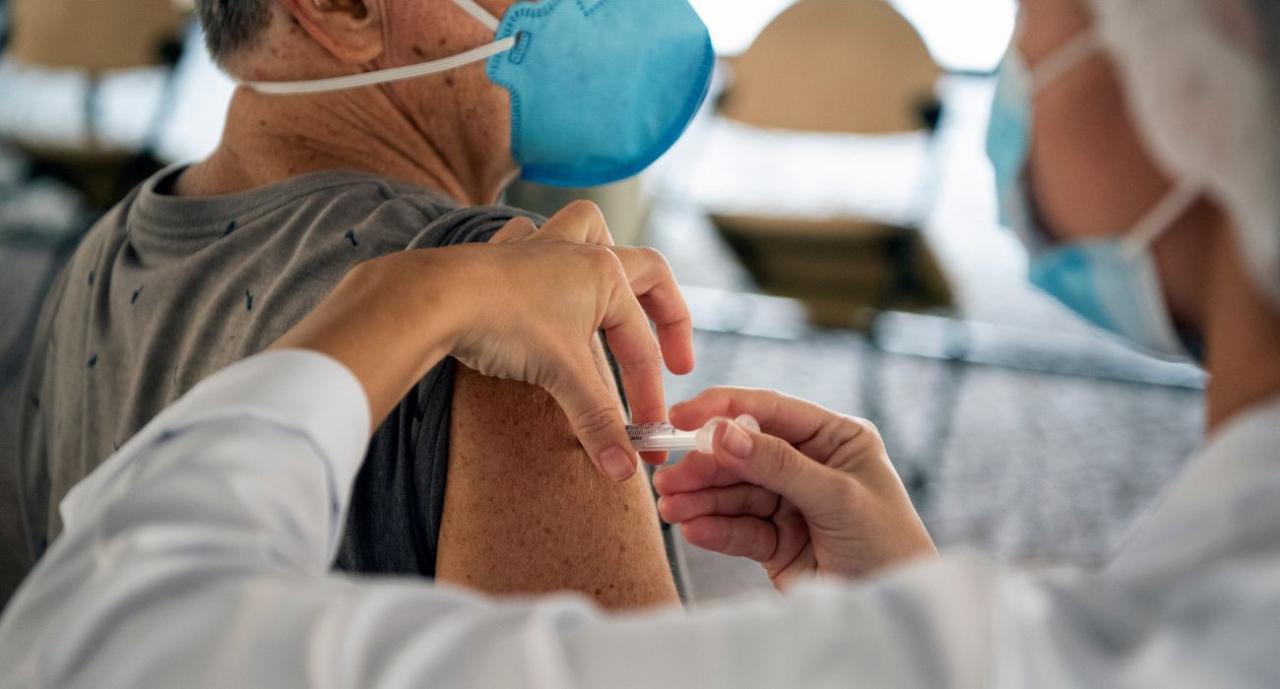
"Vaccination is an excellent example. If you offer a vaccine in a clinic in a standard way, the same for everyone, you can raise coverage from zero percent to eighty percent, maybe even eighty-five percent. But to reach the last fifteen or twenty percent, you have to think differently. You need approaches that are more personal and better tailored."
From Vaccine Availability to Vaccination
Vaccines are one of the main tools public health uses to prevent disease and outbreaks. But for a vaccine to reach a broad population, it isn't enough for it simply to exist. People need to be able to access it, understand why it matters, and trust the system that recommends it. That is why Prof. Edelstein examines not only vaccination rates themselves, but also the differences between populations, the barriers that make vaccination more difficult, and the conditions that enable communities to achieve high vaccination coverage.
What does vaccination coverage mean?
"Vaccination coverage is the proportion of the population that receives vaccines. It's important because it helps us monitor the risk of disease. The higher the vaccination coverage, the better the protection and the lower the risk of disease. It also helps us prepare for the future. If we see vaccination coverage declining, we need to understand why and think about how to improve it. It gives us the tools to predict when, how, and how large the next outbreak is likely to be."
What can we learn from differences in vaccination coverage among different groups in Israel?
"This is one of the subjects I devote most of my time to: understanding differences among subgroups within a larger population. In Israel, you can think broadly in terms of three main groups: the majority population, which is Jewish but not ultra-Orthodox, the ultra-Orthodox population, and the Arab population. Of course, there are many nuances within each of these groups.
"Our research shows that these populations behave very differently when it comes to vaccination, and as a result they also face different levels of risk from outbreaks and infectious diseases. Broadly speaking, the Arab population has the highest vaccination rates, while the ultra-Orthodox population has the lowest."
Why does the Arab population in Israel achieve such high vaccination coverage?
"The Arab population in Israel is a relatively rare example of a socioeconomically disadvantaged population that nevertheless achieves very high vaccination coverage. We wanted to understand how that happens. The first reason is a very strong social and community norm that views vaccination as simply something people do. Just as you enroll your child in preschool, you take your children to get vaccinated. The second reason is the healthcare system. In our research, people told us that they feel respected, valued, and well treated by the healthcare system. The fact that a large proportion of healthcare workers are themselves Arab has also created relatively easy communication, an understanding of cultural norms, and a shared language."
And what characterizes the challenges within the ultra-Orthodox population?
"In the ultra-Orthodox population, the issue involves a combination of several factors. First, there are practical barriers related to access. In large families, where mothers are often expected to both work and care for several children, it is not always easy to find the time to get children vaccinated. In addition, particularly since the COVID-19 pandemic, there have been greater concerns about the safety and effectiveness of vaccines. These concerns exist in other populations as well, but within the ultra-Orthodox community they are sometimes compounded by lower levels of health literacy and less exposure to subjects such as biology. In that situation, misinformation about vaccines can have a greater impact.
"It's important to note that the lower vaccination rates in the ultra-Orthodox population are almost entirely unrelated to religious reasons, and leading rabbis generally support vaccination as well."
How has COVID-19 affected trust in vaccines?
"Since COVID-19, we've seen a decline in trust in vaccines, and that's one of the things that concerns me most. Before the pandemic, routine childhood vaccinations were almost taken for granted by many parents as part of caring for their children. COVID-19 changed that. It introduced much greater skepticism, along with misinformation about vaccines in general, including vaccines that have been around for many years. In my view, the challenge now is to reverse that trend. We need to make sure that every population in Israel has easy access to vaccines, and that children and adults are vaccinated as a routine part of healthcare.
"When that doesn't happen, the result can be outbreaks of preventable diseases. We saw that this year with the measles outbreak in Israel, in which eleven children died. This is a disease that can be completely prevented through vaccination. If we can prevent cases like these in the future, that would be a very significant achievement for me."
 “Since COVID-19, we've seen a decline in trust in vaccines.”
From Local Success to International Research
The success of the Arab population in Israel in achieving high vaccination coverage became a starting point for Prof. Edelstein's broader research: can we learn from disadvantaged communities that succeed in achieving high vaccination rates and apply those lessons to other communities around the world? This was one of the central questions of the RIVER-EU project, which examined different populations in Europe and Israel and explored the factors that promote trust, access, and engagement with the healthcare system.
What was the goal of the RIVER-EU project?
"It was a six-year project involving collaboration among seven countries: Israel, Finland, the United Kingdom, Slovakia, Poland, the Netherlands, and Greece. The starting point was socioeconomically disadvantaged populations that achieve high vaccination coverage. We looked at the Arab population in Israel, alongside the Somali community in Finland and the Bangladeshi community in the United Kingdom, and tried to understand the factors behind their success. We then examined how those insights could be applied to other populations with lower vaccination coverage."
What did you learn from the project?
"We learned that the most important thing is building trust and genuinely working with communities. You need to show communities that you are there to help and support them. That's why it's important to engage with them and ask: How can we do this in a way that works for you? How can we make this successful?
"We also learned that it's important to work with healthcare professionals so they know how to welcome these populations and how to integrate them into the system. In some cases, there is also a need for community intermediaries, people who can serve as a bridge between the community and the healthcare system.
"Ultimately, we learned that even across very different countries, cultures, and communities, there is a great deal of common ground. As part of the project, we developed tools that help countries, healthcare systems, and vaccination programs transfer knowledge developed in one context and apply it in another."
Do studies like these have an impact on decision-making within the healthcare system?
"During the COVID-19 pandemic, research we conducted on vaccination schedules and on the combination of natural infection and vaccination influenced global policy and was incorporated into some of the World Health Organization's guidelines. We were also among the first teams to show that COVID-19 vaccines have a protective effect against long COVID.
"With RIVER-EU as well, the guidelines we are developing have been recognized by the World Health Organization and the European Centre for Disease Prevention and Control. For me, that's exactly the goal: for public health research to help healthcare systems make better decisions."
From Data to Community: How Vaccination Is Studied in the Modern Era
Working with communities as part of the RIVER-EU project reinforced for Prof. Edelstein just how important it is to understand the context in which decisions about vaccination are made. Some of that context emerges through direct engagement with communities, while another part can be found in the data: information from health maintenance organizations, hospitals, election results, social media, and other sources. For Edelstein, combining different sources of information makes it possible to identify broader patterns and gain a deeper understanding of the factors that influence vaccination behavior.
According to Edelstein, Israel offers extraordinary potential for this kind of research, but also faces significant challenges in making that potential a reality. "Israel is in a very unusual and fascinating position when it comes to data," he says. "On the one hand, it has world-class data. The data collected by the health maintenance organizations in particular follows individuals over twenty or thirty years. It includes hospitalizations, vaccinations, and a great deal of other important information. On the other hand, the data is highly fragmented and difficult for researchers to access because it isn't held by a single institution. There are enormous bureaucratic barriers to linking these datasets together."
What sources of information can help us understand vaccination behavior?
"I'm also interested in using data that doesn't come from healthcare sources. For example, when we tried to understand vaccination patterns in the ultra-Orthodox population in Safed, we used election data to identify which parts of the city had higher concentrations of ultra-Orthodox residents, and then linked that information to vaccination data. In another project, which is still in its early stages and has not yet been published, we're looking at how people define their identity and how that relates to vaccination behavior. As part of that work, we're also examining online sources such as TikTok and Reddit. There is an enormous wealth of data available. The challenge is how to access it, how to connect it, and how to do so while protecting privacy."
What needs to change for researchers to make better use of health data in Israel?
"One thing that could make an enormous difference to public health is a much more integrated data infrastructure. If the Ministry of Health could work with the health maintenance organizations and other partners to create data repositories that would give researchers access to information without having to spend years navigating bureaucracy, we could answer questions that currently remain unanswered."
When working with such large amounts of information, is artificial intelligence becoming part of the research process?
"I think every researcher today should be using artificial intelligence because it opens up entirely new possibilities. In one of the projects I'm working on now, we're trying to understand whether future vaccination behavior can be predicted from people's Reddit posts, even when those posts have nothing to do with health. We have a database of four million posts, and artificial intelligence allows us to analyze tens of thousands of them, work that would take humans years to complete. Of course, this requires validation to make sure the analysis is actually working."
 "There is an enormous wealth of data available. The challenge is how to access it."
How do you see artificial intelligence becoming part of future research?
"What excites me most is the possibility of building a synthetic simulation of Israeli society using generative artificial intelligence. In other words, creating agents that behave like people and then using them to test public health interventions. That's something that simply wasn't possible two years ago.
"At the same time, artificial intelligence is a tool that must be used correctly and with great care. I think of artificial intelligence, or large language models, as part of the research team. Like any team member, they are good at some tasks and less effective at others. That's why they need to be guided, their work needs to be reviewed, and they need to be integrated into a broader research process. No one works alone."
Alongside advances in artificial intelligence, what do you think a future public health research team will look like?
"I'm working to promote a much more multidisciplinary approach. I can imagine that five years from now, my team will consist not only of public health and epidemiology experts, but also specialists in mathematical modeling, computer science, psychology, sociology, and data science, a broad team of people with very different skill sets. That will allow us to address public health challenges more effectively and in ways that simply weren't possible a few years ago."
Last Updated Date : 21/07/2026