


Reclaiming Control and Belonging Amid Pain: Emotional Recovery and the Path to Meaning and Hope
After October 7, rehabilitation psychology research encountered a complex new reality and became more relevant than ever. Prof. Ilanit Hasson-Ohayon studies how people cope with illness, trauma, and loss, and how a sense of control and belonging can be restored even in the most challenging life circumstances.
For years, Prof. Ilanit Hasson-Ohayon has studied the ways people cope with serious illness, trauma, and loss. As an expert rehabilitation psychologist, she has repeatedly witnessed the human effort to regain a sense of control, meaning, and hope after life has been dramatically altered. After October 7, it was clear to her that this experience could not remain confined to the clinic. "I simply went to a hotel housing evacuees, put on a name tag that said 'Psychologist,' " she recalls, "then sat in the garden and started talking to people."
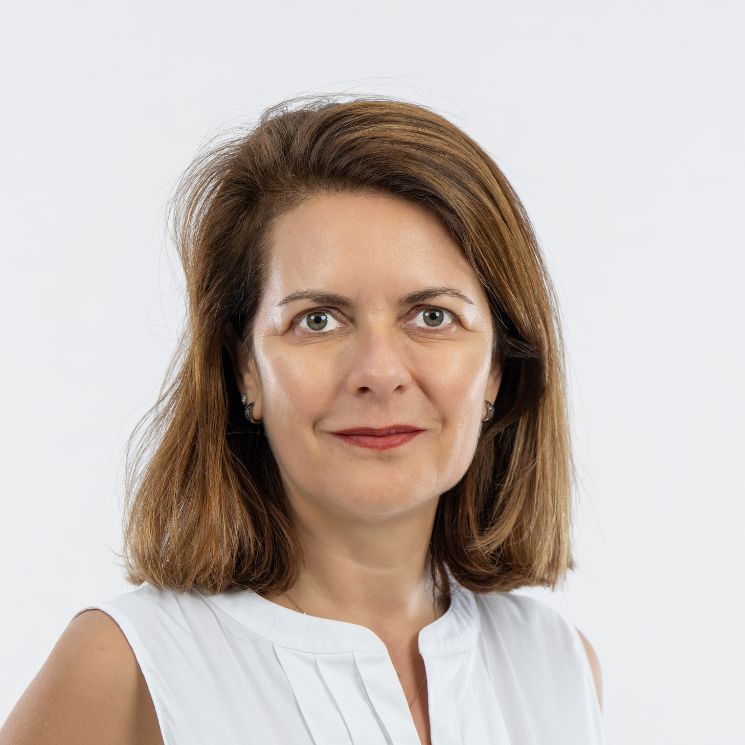 "Working in the field of rehabilitation psychology gives me a deep sense of purpose." Prof. Ilanit Hasson-Ohayon
Psychological Rehabilitation: Seeing the Whole Person
Prof. Ilanit Hasson-Ohayon is an expert rehabilitation psychologist, Head of the Department of Psychology at Bar-Ilan University, and a researcher at the Dangoor Center for Personalized Medicine. Her research focuses on coping with life experiences that disrupt a person's sense of continuity and security. From this perspective, psychological rehabilitation seeks to broaden the therapeutic lens, seeing the individual through their emotional and cognitive world, through the realities of the body and illness, through family and close relationships, and through the ways society responds to them. In Hasson-Ohayon's view, psychological coping always takes place within a real-life context, and the rehabilitation process must therefore address all of these dimensions together.
What is rehabilitation psychology, and how does it differ from traditional psychotherapy?
"Rehabilitation psychology is a relatively young field within the broader discipline of clinical psychology. It emerged after World War II, driven in part by the growing number of people coping with trauma, disabilities, and complex medical conditions, as well as by advances in medicine that enabled more people to live longer with complex physical and mental health challenges. This reality created a need for comprehensive, in-depth, and empirically grounded knowledge about the processes people go through when coping with illness, disability, trauma, loss, or significant changes in functioning.
"Rehabilitation psychology looks beyond a person's inner psychological world. It focuses on the interaction between the psychological, physical, and social dimensions of a person's life. It is a biopsychosocial model."
What does this model look like in practice?
"We need to take into account what a person is going through biologically and physically, as well as how they interact with society. It's impossible to understand psychological experiences without considering all of these factors. If we're talking about psychosis, for example, we need to consider the neurological aspects, the effects of medication and its side effects, and also the way society responds to psychosis, including the stigma associated with it and with those who live with it."
Why is it important to consider the family as part of the rehabilitation process?
"When we talk about different systemic levels, it's important to remember that caregivers are affected by the situation as well. There are formal caregivers, such as physicians and psychologists, and there are informal caregivers, family members. We see this in both psychiatry and oncology: when a family member cares for someone coping with trauma, illness, or disability, that role carries a burden. That burden has objective aspects, such as the time required, the responsibilities involved, and the practical demands of caregiving. It also has subjective aspects, such as worry, emotional strain, and changes in relationships.
"But it's not only a burden. Many people also find positive aspects in caregiving. They may feel that the relationship becomes closer, discover new meaning in it, or experience moments within the relationship in a different way. Either way, it's important to recognize family members as part of the rehabilitation process as well."
 "Rehabilitation psychology looks beyond a person's inner psychological world."
Stigma: The Hidden Barrier to Recovery
Prof. Hasson-Ohayon introduces the concept of stigma early in our conversation, and for good reason. Social stigma and self-stigma play a central role in her research because they affect not only how society views people living with severe mental illness, but also how those individuals come to see themselves. When prejudice and stereotypes are internalized, they can undermine a person's sense of self-worth, identity, and motivation to recover.
What is self-stigma, and how is it influenced by social stigma?
"Self-stigma occurs when a person internalizes society's stigma. This can happen with many kinds of stigma, not just those associated with mental illness. As women, for example, we can internalize gender stereotypes and come to think about ourselves in ways that reflect how society views women. In severe mental illnesses such as psychosis, there are stereotypes that portray people as dangerous, unpredictable, or responsible for their own illness. These are stereotypes, and when a person living with a serious mental illness internalizes them, their sense of self-worth is harmed."
How does self-stigma affect the recovery process?
"We know that one of the effects of internalized stigma is a phenomenon known as 'why try.' People feel paralyzed. If nothing is expected of me, why should I try? It leads to a decline in motivation. For many people, stigma is more difficult than the symptoms of the illness itself. They describe it as the main obstacle in their recovery process."
Do professionals also hold stigmatizing attitudes?
"Yes. Professionals hold stigmatizing attitudes too, because we are also part of society. That's why our research examines how healthcare professionals perceive people living with severe mental illness and what kinds of stigma can emerge within a therapeutic setting. In a new project we are developing, we want to connect this question to the events of October 7 and examine whether the explanations professionals give for mental illnesses such as psychosis influence their attitudes toward patients. For example, does the professional response change when psychosis is linked to a genetic family background, compared with a situation in which it is associated with prolonged reserve military service?"
Finding Meaning in Experience: Metacognition and the Path to Recovery
Alongside her research on stigma, Prof. Hasson-Ohayon also studies metacognition and its role in recovery from severe mental illness. Her work explores how a person's ability to understand their experiences, make sense of them, and cope with them affects their sense of agency and their ability to lead a fuller life.
What is metacognition, and why is it important in the recovery process?
"Metacognition is part of a broader set of reflective abilities, the ability to think about oneself, one's thoughts and emotions, and also about what another person may be experiencing. In people diagnosed with severe mental illnesses, these abilities can sometimes be impaired. There may be difficulties thinking about oneself and others, making sense of what one is going through, or understanding how one interprets reality. When that happens, the recovery process can be significantly affected.
"The goal is to help people understand what they are experiencing. For example, if a person has hallucinations but is able to recognize that the experience is related to their illness, and can also identify what helps them respond to it more effectively, that can help them cope."
Do you also apply metacognitive principles in treatment?
"We have a specific therapy that is based on metacognition. I am part of a large international group that works with this approach, called MERIT, Metacognitive Reflection and Insight Therapy. It was developed by a dear colleague of mine, Prof. Paul Lysaker, who passed away a few years ago.
"Together with research groups in the United States, the Netherlands, and Israel, we studied this intervention. In Israel, we conducted two intervention studies, one of which was a randomized controlled trial at Bar-Ilan University's community clinic. In both studies, we saw very impressive results. It was extremely encouraging to see that a treatment lasting only six months could genuinely make a difference in people's lives and give them tools to think about themselves in ways that help them cope more effectively and adapt to different situations."
.jpeg) "The goal is to help people understand what they are going through." Prof. Ilanit Hasson-Ohayon, pictured with a group of students she works with.
"The goal is to help people understand what they are going through." Prof. Ilanit Hasson-Ohayon, pictured with a group of students she works with.
Healing in Motion: Treating Trauma While the Crisis Continues
The events of October 7 changed the work of many therapists and researchers in Israel, bringing professional questions face to face with an urgent reality on the ground. For Prof. Hasson-Ohayon, the transition was immediate. In the very first days, she and her colleagues went to the hotels where evacuees were staying and met people living through pain, loss, and uncertainty.
It quickly became clear that existing knowledge about trauma and bereavement was essential, but that the situation also called for a broader range of expertise, including work with physical injuries, displacement, grief, families under stress, and couples and families forced to adapt to a new reality. As she explains, the work after October 7 required an integration of trauma treatment, grief counseling, rehabilitation psychology, and individual, couples, family, and community-based interventions.
What was unusual about the therapeutic work after October 7?
"We have a great deal of knowledge about working with trauma, and we also have knowledge about working with grief. There are evidence-based practices, exposure therapy, cognitive therapy, narrative therapy. But the reality after October 7 was unusual in many ways, and there were multiple needs that had to be addressed simultaneously. We had to work from the top down, drawing on what we know from large-scale traumatic events around the world and from our experience treating trauma and loss.
"At the same time, there was also a bottom-up process of learning through direct encounters with patients: understanding what people needed right now, on a day-to-day basis, within a reality that was still unfolding."
Why couldn't the reality after October 7 be approached as a typical case of post-traumatic stress?
"Because it wasn't a single traumatic event, and its consequences went far beyond post-traumatic stress. In many cases, people experienced multiple traumas at the same time, alongside losses that overlapped and compounded one another. People were also coping with physical injuries, which meant that a foundation in rehabilitation psychology was essential as well, understanding how to work with people who have injuries, disabilities, or functional limitations. Beyond that, there was a need to connect individual therapy with couples and family therapy. It was a process of integration."
In your research on the period following October 7, you also study secondary traumatization. What does that mean?
"Secondary traumatization occurs when people experience symptoms similar to post-traumatic stress, even though they were not directly exposed to the traumatic event itself, but rather encountered it through testimony, accounts, or other materials. Together with Prof. Danny Horesh, who researches this topic with me in the department, we began examining how exposure to our patients' trauma affects us as therapists.
"Then, by chance, I had a conversation with a neighbor who works in the media, and I realized what journalists go through when they interview people, film events, and are repeatedly exposed to difficult material. That led us to study secondary traumatization among both therapists and media professionals. The findings were very interesting because we found that both groups experienced post-traumatic symptoms, but the media professionals were in a more severe state than the therapists."
Why were media professionals in a more difficult situation than therapists?
"I think it may also be related to the issue of metacognition. Therapists have more tools to understand and process what they experience in the course of their work. As a therapist, I can recognize intrusive images that arise after a session with a patient earlier in the day, identify them as secondary traumatization, and understand why they are appearing. That ability helps bring order to the experience and make sense of it.
"For media professionals, who work with extremely difficult material but do not necessarily receive training in how to process it emotionally; those tools are less available."
 "Media professionals do not necessarily receive training in how to process these experiences emotionally." Journalists at the memorial site for those murdered at the Nova music festival.
Living Alongside Difficulty: What Recovery Looks Like in Rehabilitation Psychology
Rehabilitation psychology starts from the understanding that difficulties do not always disappear, and that it is not always possible to return to life as it was before. Serious illness, loss, or ongoing trauma can change the body, affect daily functioning, alter relationships, and undermine a person's basic sense of security. In that reality, the goal of rehabilitation is not to erase pain, but to help people rebuild a sense of capability, connection, meaning, and agency.
What does success look like in rehabilitation treatment?
"Success in rehabilitation treatment is when a person feels that their coping skills have improved and that they are able to respond to challenges in more adaptive ways. This may be reflected in symptom improvement, but it is also connected to a sense of meaning, which can be tremendously helpful in coping, and to the ability to regulate emotions, understanding what I am feeling, how I react to things, and how I can manage my experiences and responses.
"How do you know when someone has completed treatment? Usually, they know. They have their own ways of coping and their own abilities. That doesn't mean life after therapy will be perfect. There is no life without stress. But a person can reach a point where they feel capable of dealing reasonably well with stress and with the challenges that arise along the way."
How do you maintain personal resilience while facing so much pain and trauma?
"Working in the field of rehabilitation psychology gives me a deep sense of purpose. I think that confronting difficult experiences, and being aware of them, can also sharpen some of the most fundamental questions: Why are we here? What do we want to do? And how do we want to live?
"I also learn a great deal from my patients. I remember a patient I worked with many years ago, when I was at Hadassah. She came into a session and asked me, 'Did you see the flowers at the entrance?' Ever since then, I've looked at flowers differently. She taught me something about the ability to notice small moments of life and beauty, even within a difficult reality."
Can meaning always be found within hardship?
"Not always, but it is certainly possible. Some situations are truly tragic and deeply painful, and even as a therapist I encounter suffering that is extremely difficult. People are sometimes surprised by the inner resources they possess and by their ability to cope with different challenges, but that doesn't mean the hardship disappears or becomes easier. For many people, the challenge lasts a very long time, sometimes even for the rest of their lives. Meaning can help a person cope, but it does not erase the pain."
Through her work with illness, trauma, and loss, Prof. Ilanit Hasson-Ohayon also returns to the responsibility of Israel's mental health system. If people are to receive support when they need it, care must become more accessible. In her view, that requires greater investment in mental health professionals: more psychologists, more supervision and training, and more education in trauma, grief, and rehabilitation psychology.
In her view, working with people coping with injury, illness, or trauma requires specialized training. "We need to teach our students how to work with people living with physical or mental disabilities," she says. "This is a field of expertise in its own right."
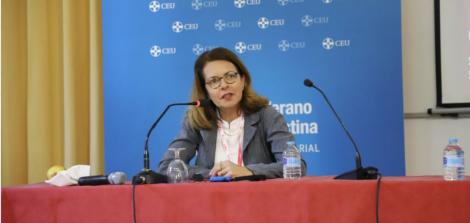
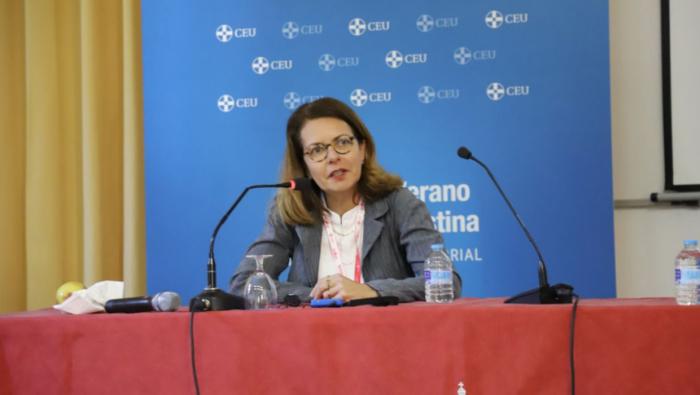
Photo credit: Prof. Ilanit Hasson-Ohayon at a seminar on victims of terrorism in Spain, 2025.
Last Updated Date : 21/07/2026