Reading Between the Words: Language as a New Internal Detector of Dementia
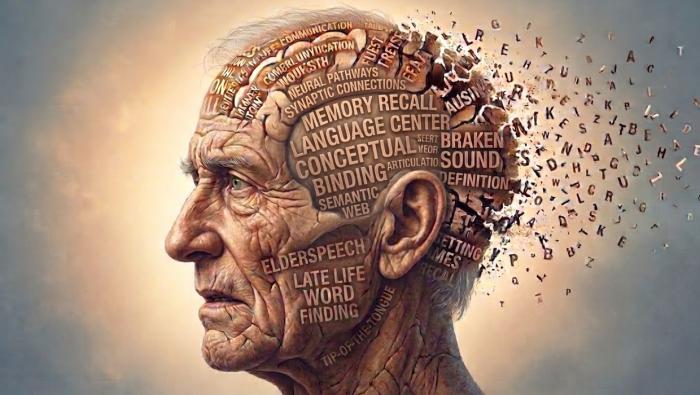
The simple sentence you’ve just spoken carries far more than meaning; it contains a biological signature of your brain’s health. Dr. Galit Agmon, a computational neurolinguist at Bar-Ilan University, is working to develop tools that can detect subtle neurological changes through the structures of syntax and the music of speech, years before physicians can identify them.
In the not-so-distant future, diagnosing diseases like Alzheimer’s may begin with a brief conversation on a smartphone app. Instead of undergoing invasive procedures such as a lumbar puncture or waiting months for an expensive MRI, a computer will analyze the complexity of your sentences, the rhythm of your speech, and the “music” of your voice, determining whether you fall within the normal range or are at risk of cognitive decline.
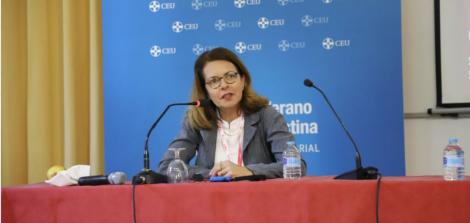
Dr. Galit Agmon, a researcher in the Department of Linguistics and at the Gonda Multidisciplinary Brain Research Center at Bar-Ilan University, and a research fellow at the Dangoor Center for Personalized Medicine, is building precisely these tools. She came to the world of neurology from the fields of linguistics and cognition. After completing a postdoctoral fellowship in the Department of Neurology at the University of Pennsylvania, she returned to Israel in the midst of the war to establish a laboratory for computational neurolinguistics.
In an interview, Dr. Agmon explains how a computer can “hear” what the human ear misses, and why the future of medical diagnosis may lie in the very way we construct our sentences.
The Computer as Linguist: Why Isn’t a Human Doctor Enough?
What advantage does a computational algorithm have over manual linguistic analysis when it comes to diagnosing disease?
“Our goal is to build tools that can diagnose different types of dementia with a level of speed and precision that simply doesn’t exist today,” says Dr. Agmon. “When we say a simple sentence like ‘the child walked to school,’ the brain constructs a ‘syntactic tree’ – words connect into units, and those units into hierarchical sentence structures. If a linguist were to sit down and analyze this manually, it would take an entire day to map just a few minutes of speech.
“That kind of analysis becomes far more complex when dealing with natural speech. In everyday conversation, people change their minds mid-sentence, they fill pauses with ‘uh’ and ‘um.’ And yet the brain continuously manages to segment and rebuild sentences on the fly. Understanding that challenge is what led me to the research I’m doing now. A computer lets us process vast amounts of data and measure, with real precision, how far that syntactic tree branches – how deep it runs, how intricate its structure becomes. A decline in that complexity is often the first clue that something may be wrong in the brain regions responsible for language.”
Prosody: The Music That Reveals the Mind
Let’s talk about “prosody,” a central concept in your research. What does it mean, and why is it so critical for diagnosis?
“In everyday language, people call it intonation, but the linguistic term is prosody – the music of speech: shifts in rhythm, intensity, pitch, and pauses. These are elements you can’t fully capture in writing, but you can think of them as musical notes.
“Prosody is one of the brain’s working tools. It helps us ‘mark’ key junctions in the syntactic tree, making it easier for the listener to follow. For example, when I say a complex sentence, my brain adjusts the rhythm of speech to highlight its structure. One of my studies looks at exactly this interaction: how the brain uses musical cues to ease syntactic processing.
“Our hypothesis is this: if we detect a mismatch between how something sounds and what is being said, it may point to neurological impairment. Speech that sounds overly ‘robotic,’ or that lacks natural prosodic variation, immediately strikes us as off. That’s an acoustic signal we can measure. While the human ear can only register that deviation qualitatively, computational tools can quantify it and extract a precise ‘vocal signature.’
“One of the things I’m currently studying is the interaction between syntax (‘what is said’) and prosody (‘how it’s said’), and how the brain uses both simultaneously to construct meaning. The hypothesis is that in certain pathological cases, there’s an imbalance in the ability to align the ‘how’ with the ‘what.’
“It’s important to understand: language isn’t a single ‘product,’ and there isn’t one specific place in the brain you can point to and say, ‘this is where language happens.’ It’s a network of many different capabilities, distributed across multiple regions and interconnected. That’s why examining a specific feature can serve as an indicator of damage in a particular brain area, or of broader cognitive decline.”
Does our speech really become simpler as we age?
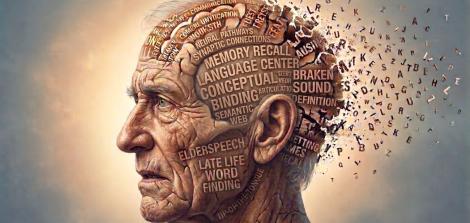
“At a certain point, neurons in the brain begin to die, and we don’t generate new ones. That affects the entire cognitive spectrum, and language in particular. Speech becomes simpler – not just in terms of shorter sentences, but in the syntactic tree itself, which grows less complex.
“It’s fascinating to see that as children, we start out with simple sentences. There’s evidence showing that the more complex syntactic structures we acquire later in childhood are also the ones most vulnerable to decline in older age.
“On the other hand, vocabulary size is largely preserved. In fact, at a certain stage, older adults may even have a richer vocabulary than younger people. But retrieval can become slower or more effortful. When we pair this kind of research with brain imaging, we sometimes see that outwardly everything appears normal, but behind the scenes, the brain is working much harder.”
 An analysis of linguistic features in diaries written by nuns in their twenties made it possible to predict the development of Alzheimer’s decades later.
The Nun Study: Youthful Diaries That Predicted the Future
One of the most striking demonstrations of language as a window into the brain’s future is the Nun Study, an extraordinary longitudinal project launched in the 1980s at the University of Kentucky.
Hundreds of Catholic nuns agreed to dedicate their lives, and even their brains after death, to science. At the heart of the study was an analysis of short autobiographies the nuns had written decades earlier, upon entering the convent in their early twenties.
“By analyzing the linguistic features in diaries they wrote in their twenties, researchers were able to predict which of them would go on to develop Alzheimer’s decades later,” explains Dr. Agmon. “The original study found that nuns who wrote in a richer style in their youth, characterized by high ‘idea density’ and greater syntactic complexity, were at significantly lower risk of developing dementia in their eighties and nineties. In fact, the density of ideas in their writing predicted the disease with about 85 percent accuracy, long before the nuns had even reached age 30.
“That connection, between linguistic features and the likelihood of developing the disease, already showed remarkable predictive power back then,” she adds. “Today, our goal is to bring that insight into the modern era, to apply it to spontaneous speech using far more sophisticated computational tools. The aim is to detect these early signals in real time, without waiting decades.
“I’m collaborating with colleagues at Sheba Medical Center, where speech samples are collected over many years. This kind of dataset allows us to look back and pinpoint exactly when speech began to change. Could we have detected the disease five or even ten years before clinical symptoms appeared? It’s not deterministic like mathematics, it’s probabilistic. But it gives us a high-risk group that can be closely monitored.”
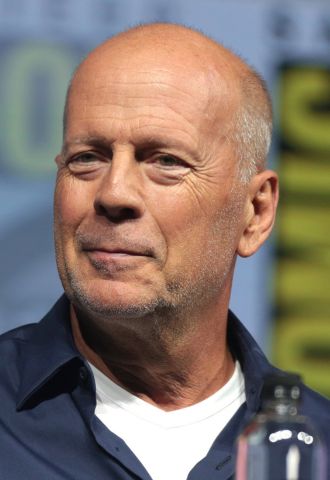 Frontotemporal dementia, a relatively rare form of dementia, has become more widely recognized in recent years following actor Bruce Willis’ diagnosis. Photo: Wikipedia
Bruce Willis’s Case: Alzheimer’s vs. FTD
You focus extensively on frontotemporal dementia (FTD). What sets it apart from Alzheimer’s?
“FTD has become more widely known to the public in recent years because of Bruce Willis, who was diagnosed with the condition. It’s a relatively rare form of dementia, and in its early stages, it tends to be localized to specific regions in the frontal and temporal lobes, unlike Alzheimer’s. In the language variants of the disease, the damage is more concentrated in the left hemisphere, which is responsible for language. That’s why linguistic analysis can play a key role in diagnosing the condition and distinguishing it from Alzheimer’s or Parkinson’s.
“Accurate diagnosis is especially critical because patients are often relatively young, and FTD is sometimes mistaken for a psychiatric disorder or even dismissed as a ‘midlife crisis.’ Prescribing the wrong medications in such cases can actually make things worse. This is where precise science comes in. In my research, I’ve found a direct correlation between a decline in syntactic complexity and levels of certain proteins in the cerebrospinal fluid. That provides scientific validation that changes in language are not merely psychological, but also physical evidence of neuronal loss in the brain. Linguistic analysis is a sensitive and powerful tool that can support early diagnosis and reduce the need for invasive testing.”
 In natural speech, unlike artificial lab-based tests, the most revealing clues about brain health are hidden in plain sight.
Digital Biomarkers: The Promise of Personalized Medicine
What advantage does a vocal signature have over a blood test or an MRI?
“The key advantage of a vocal signature is that it’s non-invasive, relatively inexpensive, and can be accessed remotely. The ideal scenario is an app that monitors your everyday speech and detects whether your word retrieval or syntactic complexity has declined relative to your own baseline. In natural speech, unlike artificial lab tests such as the image-description tasks used since the 1970s, the most meaningful information about brain health is embedded. We’re currently working with computer scientists to adapt these computational tools to Hebrew, with the goal of turning language into a quantitative metric. Ultimately, the test would produce a number, much like a blood hemoglobin level.
“The vision is to create an app that continuously monitors you and sends alerts. Continuous monitoring is crucial because it evaluates you against yourself, your own starting point. The goal is self-monitoring: if your speech rate or syntactic complexity declines over time, the system would flag it and prompt you, ‘Something has changed, it’s worth getting checked.’ This is a non-invasive, personalized digital biomarker. You wouldn’t need to undergo an MRI or a lumbar puncture to get an initial indication. It allows us to catch the disease at a very early stage, which is the most critical window for providing support and slowing its progression.”
You’re talking about comparing each person to their own baseline, rather than to a statistical average. Why is that such a significant shift?
“It’s possible for someone to still fall within the ‘normal range’ for their age, but relative to themselves, compared to how they spoke two years ago, there’s a clear decline. That’s the essence of personalized medicine: comparing a person to their own baseline, not to a statistical average.
“A computer allows us to track many features at once: speech rate, vocabulary richness, and syntactic complexity. Often it’s not about a single feature, but about the overall pattern. AI and machine learning tools can sift through vast amounts of data in exactly this way. That makes it possible to identify cases at a very early stage, which is the most critical factor in dementia, catching it early so we can slow its progression and provide support in time.”
You’ve mentioned adapting these tools to Hebrew. How challenging is it to apply computational methods to our language?
“It’s far from straightforward. Most existing tools are text-based and were developed for English. When you try to apply them to Hebrew, you run into fundamental differences. Hebrew is typically written without vowel markings, which creates a high level of ambiguity that English-based systems simply don’t face. For example, one single three-letter word (i.e., 'ספר') can represent entirely different meanings, such as ‘book,’ ‘told,’ or ‘count,’ depending on context. A computer, without additional cues, struggles to distinguish between them, which leads to errors.
“I’m currently collaborating with Yuval Pinter from computer science at Ben-Gurion University to develop tools that can overcome these challenges. If we want to analyze Hebrew at a high level, we need to refine and adapt these tools accordingly.”
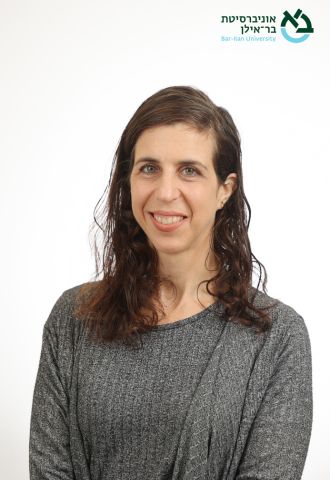 “The ideal is to be able to say exactly what stage the disease is at and how it is progressing, without the need for invasive procedures,” says Dr. Galit Agmon.
Beyond the Lab: The Human Connection
You spent time observing in diagnostic clinics at UPenn. How did those encounters shape you?
“Sitting there and watching these people – it’s profound. You see couples coming in together, and you realize these aren’t just data points; they’re human beings, entire worlds of struggle and care. I remember one woman who came with her husband, sitting after his diagnosis, who asked the doctor, in a quiet but loaded way, ‘What kind of timeline should I expect?’
“It was a moment that shook me. It carried so much – both a kind of farewell to him, and the unspoken question of how long she, as his caregiver, would have to carry this overwhelming burden. It affected me deeply and gave me a completely different connection to the data.”
Returning Home in a Time of War
You came back to Israel in the midst of the war. How do you reflect on that decision?
“When we returned, everyone asked, ‘Why would you come back?’ “But being in the U.S. on October 7, it felt like the people around you were living in an entirely different reality, even with expressions of support. There were uncomfortable encounters, posters being torn down, and an overall absence of an empathetic space. Two days after it happened, I went to our regular weekly group meeting, and everyone behaved as usual, as if nothing had happened. I asked them, ‘Would you act this way after 9/11?’ I was literally shaking.
“And these are colleagues and friends who are supportive and caring, but it just wasn’t on their radar. For me, returning to Israel meant coming back to a place where you don’t have to explain. Here, everyone understands the complexity.”
Watch Dr. Agmon’s lecture at the University of South Carolina
A Vision for the Next Decade: Turning Intuition into a Model
Do you think that within a decade, we’ll be able to prevent dementia through early detection via language? And where do you see the field of digital biomarkers heading?
“As for preventing the disease, I can only hope. I’m not a physician, but like everyone else, I’m relying on continued advances in medicine.
“When it comes to digital biomarkers, I believe the vision of an app that monitors speech will become a reality. The goal is that within a decade, we’ll understand speech and language far better than we do today. We’ve all had the experience of talking to someone and sensing that something isn’t quite right. That’s what we call intuition. My vision is to turn that intuition into something measurable, to model it.
“Language is a complex behavior that is directly tied to the brain, and it offers a pathway toward more precise, more human-centered medicine. This goes beyond dementia. We can often sense that someone on the autism spectrum, or someone dealing with depression or schizophrenia, speaks ‘a bit differently.’ Right now, research in these areas is still exploratory, but the goal is to make it predictive, to be able to say exactly what stage a condition is at and how it is progressing, without the need for invasive procedures.
“I want us to reach a point where language metrics are standardized, just like a blood test. Where we have normalized indices, and a physician can look at the data and say, ‘This measure falls outside the norm, it raises suspicion of a particular condition, and these are the next tests to run.’ That’s the direction, to turn language into a precise, standardized diagnostic tool.
“Language is a uniquely human behavior, no other species has this kind of combinatorial capacity. That’s what makes it the best window we have into the mind and the brain,” Dr. Agmon concludes. “If we can detect impairment early, we give all of us a better chance at healthy aging, and at preserving memory and personal identity over time.”
Last Updated Date : 15/06/2026