


The Immune System
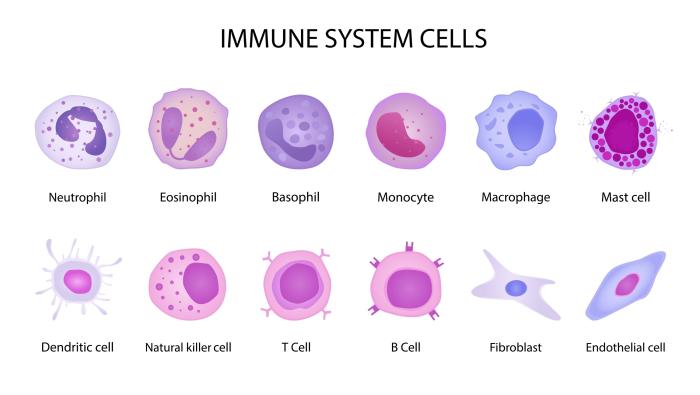
The immune system is a complex network of cells, organs, and tissues whose main role is to protect the body from harmful invaders (pathogens) such as bacteria and viruses, and to identify and eliminate damaged or cancerous cells. It works through a critical ability to distinguish between the body’s own components and foreign substances.
What are the main components of the immune system?
The system is made up of two major parts that work together. The innate system provides immediate, non-specific defense through physical barriers and phagocytic (engulfing) cells. The adaptive system is more sophisticated and learns over time, developing a specific and targeted response against a particular pathogen (an organism such as a bacterium, virus, fungus, or parasite whose invasion of the human body can cause disease) through T cells and B cells, which produce antibodies.
What is immune memory, and how do vaccines work?
Immune memory is the defining feature of the adaptive system. After a first encounter with a pathogen, the body produces memory cells. Upon re-exposure, these cells trigger a rapid and powerful immune response that prevents illness. Vaccines work on this principle: they present the body with components of the pathogen to “train” the adaptive system to create immune memory.
What happens when the immune system fails?
A malfunction of the immune system appears in three main ways: autoimmune diseases (when the system attacks healthy tissues), allergies (an overreaction to harmless substances), or immunodeficiency (a system that’s too weak, such as in cancer or AIDS, which leads to high susceptibility to infections). In the lab of Prof. Mira Barda Saad at the Dangoor Center for Personalized Medicine, drugs are being developed that preserve the function of the immune system in various types of cancer.
Last Updated Date : 26/04/2026