


RNA Interference (RNAi)
RNA interference (RNAi) is a natural protective and regulatory mechanism found within human cells. Its primary role is to block the activity of specific genes, a process known as “gene silencing,” thereby preventing the production of proteins that are undesirable for the cell or helping defend against viruses.
To understand how RNA interference works, it is important to briefly understand how cells produce proteins. DNA serves as the cell’s instruction library, containing the information required to manufacture proteins. When a cell needs to produce a particular protein, it creates a temporary copy of the relevant instruction. This copy is called messenger RNA (mRNA), and it carries the instruction from the DNA to the cell’s protein-production mechanisms.
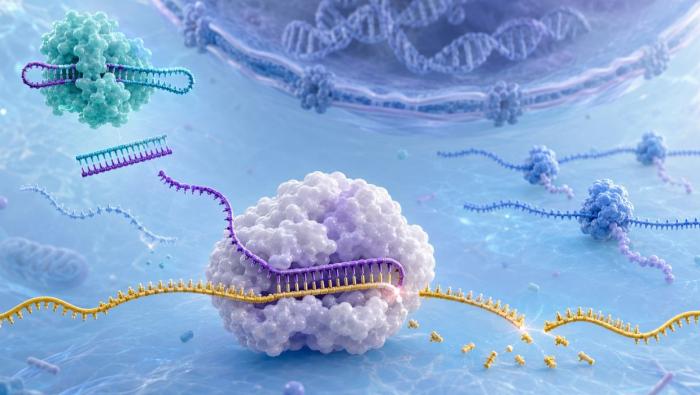
RNA interference acts at this stage by recognizing specific mRNA molecules and promoting their breakdown. Once the mRNA is destroyed, the instructions for producing the protein disappear, and the cell can no longer manufacture that protein. In this way, RNA interference can “silence” specific genes, reduce the production of proteins that are harmful or unnecessary to the cell, and in some cases help combat viruses attempting to reproduce within it.
The ability to precisely design short RNA molecules that activate this mechanism has enabled the development of therapies targeting specific genes. For example, these approaches are already being explored in rare genetic diseases, metabolic disorders, conditions involving high cholesterol, and research related to cancer and viral diseases.
It is important to distinguish between the term “RNA interference (RNAi),” which refers to the biological mechanism itself involving components such as Dicer, RISC, Argonaute, and short RNA molecules, and the term “RNA silencing,” which refers to the result of that mechanism: the reduction or shutdown of protein production from a specific gene. In other words, RNAi is the mechanism, while RNA silencing is the outcome.
Frequently Asked Questions
- What is RNA interference?
RNA interference (RNAi) is a natural biological process in which small RNA molecules activate a regulatory system within the cell that reduces or shuts down the activity of specific genes. In this process, the cell uses short molecules, known as siRNA and miRNA, to identify messenger RNA (mRNA) molecules carrying genetic instructions and break them down. Thus, the genetic information is prevented from being translated into an active protein.
- How does gene silencing through RNAi work?
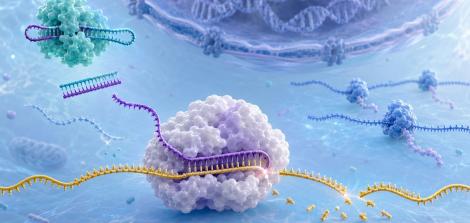
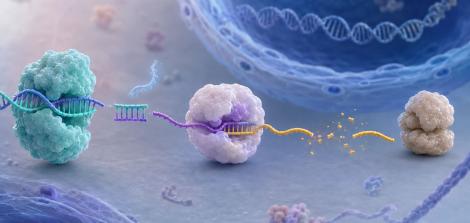
The mechanism operates by recognizing and cutting specific mRNA molecules. When a small RNA molecule (siRNA) binds to a specialized protein complex in the cell known as RISC, one of its strands remains attached to the complex and serves as a “recognition template.” Based on this template, the complex locates the matching mRNA molecule, binds to it, and cuts it so that it can no longer be used to produce proteins. As a result, the amount of protein produced by that gene drops dramatically or disappears entirely.
- What is the difference between RNA interference and RNA silencing?
RNA interference (RNAi) is the name of the entire biological mechanism, meaning the process in which short RNA molecules and cellular proteins (such as Dicer and Argonaute) work together. RNA silencing refers to the final outcome of this process: the reduction or disappearance of specific mRNA molecules, leading to the shutdown of protein production. Put simply, RNAi is the “operating system,” while RNA silencing is the “effect” it produces.
- What is the difference between RNA interference and gene editing technologies such as CRISPR?
Gene editing using CRISPR technology creates a permanent and stable change directly in the DNA sequence within the cell nucleus, meaning its effects remain indefinitely. RNA interference, by contrast, does not alter DNA at all. Instead, it acts within the cell’s liquid (cytoplasm) on RNA molecules that have already been copied from the DNA. Because these RNA molecules naturally degrade over time, the effect of RNA interference is temporary and gradually disappears once treatment stops. In some situations, this is considered a more flexible and potentially safer approach.
- What is the role of the Dicer enzyme in the RNAi mechanism?
The Dicer enzyme, whose name reflects its “cutting” function, is a key component of the RNAi system. Its role is to identify long double-stranded RNA molecules and cut them into short, precise fragments approximately 21 to 23 nucleotides long, the basic building blocks of RNA. Without this “cutting” activity performed by Dicer, the cell would not be able to produce the small RNA molecules required to recognize and silence specific genes.
- Does RNA interference exist naturally in the human body?
Yes. RNAi mechanisms exist naturally in most complex organisms (eukaryotes, organisms whose cells contain a nucleus, including humans). In nature, this mechanism serves several important functions, including the fine regulation of gene activity, maintenance of genetic stability, and defense against viruses (particularly in plants and invertebrates). In humans, the detection of foreign RNA activates both the RNAi system and additional immune defense mechanisms, such as the interferon system, which signals the presence of viral infection.
- Which diseases are currently treated using RNA interference?
Today, approved therapies based on RNA interference technology already exist for the treatment of certain rare genetic diseases (such as hereditary amyloidosis), as well as some metabolic disorders and high cholesterol. In addition, advanced clinical trials are underway for the treatment of viral liver diseases (such as hepatitis B) and various types of cancer in which researchers attempt to “silence” genes that drive uncontrolled cell division. It is important to note that many of these applications are still in the research and experimental stages.
- What are the challenges of using RNA interference as a therapy?
The main challenge is delivering RNA molecules safely into the correct cells within the body. RNA molecules are highly fragile and tend to break down rapidly in the bloodstream. To protect them, scientists often package them within tiny lipid nanoparticles or modify them chemically. Additional challenges include preventing the unintended silencing of other genes in the body (off-target effects), and reducing unwanted immune reactions against the treatment itself.
Last Updated Date : 17/08/2026