


Near-Infrared Light
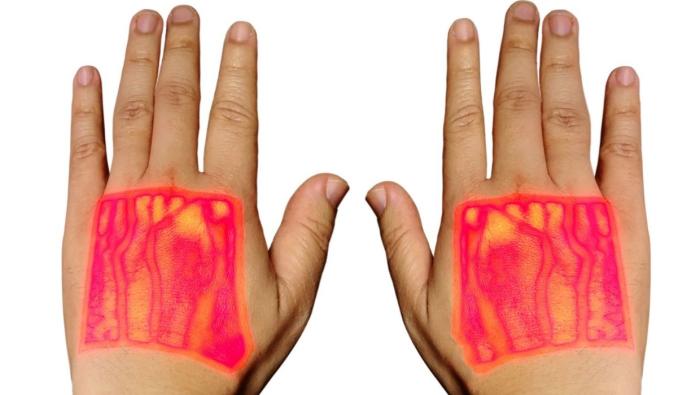
Near-infrared (NIR) light is invisible to the human eye. Its wavelengths are slightly longer than those of red light, the color with the longest wavelength that the human eye can see. Because its wavelengths are close to the visible spectrum, it is referred to as “near” infrared.
In recent decades, this part of the spectrum has become an important tool in a variety of research and medical applications, both for monitoring physiological parameters and for treatment, thanks to its unique ability to penetrate the skin and reach deeper tissues.
For monitoring and diagnostic purposes, sensors detect near-infrared light reflected from tissue and use it to provide physiological information about what is happening deeper inside the body, such as oxygen levels and blood flow. This allows for real-time, noninvasive monitoring without exposure to ionizing radiation. A fingertip pulse oximeter, for example, works on a similar principle, using red and near-infrared light that is usually shone through the finger.
In therapeutic applications, however, the light is absorbed by the tissue rather than measured, and the energy it delivers to the tissue is what produces the therapeutic effect (“photobiomodulation”). Studies indicate that certain wavelengths of red and NIR light may affect cellular processes.
1. What is the difference between red light therapy and near-infrared light therapy?
While both therapies work on a similar principle of stimulating cellular activity, the main difference is how deeply the light penetrates the tissue. Both are forms of light-based therapy, but they use different wavelengths. Red light is visible and tends to be absorbed by tissues closer to the surface, while NIR light is invisible and can penetrate deeper into the tissue. As a result, each may have different applications depending on the therapeutic goal. The potential benefits of NIR are being studied in a range of areas, including the treatment of muscle pain, joint rehabilitation, and neurological support.
2. How does near-infrared light penetrate deep into tissue?
The key to this ability lies in the physical properties of light. Light travels in waves, and wavelength determines both the color perceived by the human eye and how deeply light can penetrate matter. Across the visible and near-infrared range, longer wavelengths generally penetrate deeper, up to the point where absorption by water rises sharply. The range of wavelengths that allows this deeper penetration is known in the scientific literature as the tissue’s “optical window.”
While visible light is blocked and almost completely absorbed by the outer layers of the skin, NIR light can pass beyond these surface barriers. This is because two of the most abundant components in the human body, water and hemoglobin (the oxygen-carrying protein in the blood), absorb relatively little NIR light within this range, allowing it to reach depths of up to a few centimeters, depending on the tissue.
The depth of penetration varies depending on the specific wavelength (near-infrared wavelengths typically range between 700 and 1,400 nanometers), as well as the intensity of the light, the duration of exposure, and the type of tissue.
3. How might near-infrared light affect the body’s cells?
One area of research is photobiomodulation, which uses specific wavelengths of light to influence biological activity in cells. Studies point to potential therapeutic mechanisms involving mitochondrial activity (which produces most of the energy available to the cell), signaling pathways associated with inflammation, and oxidative stress (a state in which harmful substances accumulate in the cell faster than its natural defense systems can neutralize them).
The findings suggest potential therapeutic applications in a range of areas, including wound healing, muscle recovery, and pain management. Possible neurological applications are also being investigated, including for head injuries, dementia, and depression. It is important to note that in some of these areas, the evidence is still preliminary and no widely accepted treatment protocols have yet been established.
One of the challenges in developing such protocols is that the body does not respond to light uniformly. Skin thickness, pigmentation, the layer of fat beneath the skin, and local blood supply all affect how much light actually reaches the tissue and the signal reflected back from it.
4. What is NIRS technology, and how does it aid medical diagnosis?
Near-infrared spectroscopy (NIRS) is a noninvasive measurement technique that uses NIR light to assess changes in tissue oxygenation. Because oxygenated and deoxygenated hemoglobin absorb light differently, NIRS can provide real-time information about changes in the amount of oxygen reaching the tissue. The technology is used, among other applications, to monitor the brain and muscles, both in research and in certain medical settings.
5. Does near-infrared light therapy involve any risks?
NIR radiation is non-ionizing and does not include UV radiation. In controlled medical and research settings, it can be used noninvasively, but its safety depends on the wavelength, intensity, duration of exposure, and the area being treated. When using therapeutic devices, it is important to follow the instructions for use and use appropriate eye protection when required.
6. How do NIR technologies fit into the vision of personalized medicine?
NIR is particularly relevant to personalized medicine because it enables biological data to be collected from a patient’s body in real time, continuously and noninvasively. This information may help clinicians understand how an individual patient responds over time, track changes, and tailor medical decisions to that patient’s specific data. This reflects one of the core principles of personalized medicine: moving away from reliance on the “average patient” and toward understanding the characteristics and responses of each individual.
Last Updated Date : 12/10/2026