


Aging Processes: Will the solution to a rare disease slow down aging for all of us?

For years, young people who exhibited signs of accelerated aging were thought to be suffering from Alzheimer’s or Parkinson’s disease. An interview with Dr. Ronit Ilouz, from the Dangoor Center for Personalized Medicine at Bar-Ilan University, addresses groundbreaking research that uncovered a new disease. The discovery may provide a key to stopping cognitive deterioration, not only in patients with rare conditions but for each and every one of us.
At the center of Dr. Ronit Ilouz’s laboratory is a single critical enzyme named PKA, which conducts the entire cellular orchestra. It operates and calibrates nerve activity in the brain and controls the transfer of messages. "It makes decisions for the nerve cell: how to work and how to transfer messages," explains Ilouz.
PKA has "siblings," which are variants of the same protein known as isoforms. "Like a family in which all the siblings are very similar in structure, but each has its own personality and a completely different role," she adds. "We study a specific isoform known as R1-beta (R1β), found in very high concentrations in the brain. The question we asked was: what is its function, and what happens when it is defective?"
The Laboratory as a "Google Map" of Proteins
Dr. Ilouz is a world expert in the cellular organization of signaling proteins, which are crucial proteins that mediate communication between cells. They act as "messengers," passing information from outside the cell to the inside and triggering a chain of chemical reactions that influence functions such as growth, division, and reaction to stimuli. Her career has been dedicated to understanding these mechanisms, from her doctorate in genetics and biochemistry at Tel Aviv University to a prestigious post-doctorate at the HHMI Medical Center at the University of California, San Diego. At times, her work resembles molecular sleuthing; she successfully cracked the code of the enzyme's three-dimensional structure and has since moved on to studying what went wrong in disease.
Dr. Ilouz’s main innovation lies in the understanding that biology is not simply a matter of "what," but rather "where." She developed high-resolution mapping technology, a sort of "Google Maps" for signaling proteins, allowing researchers to see the precise location (localization) of each protein within cellular organelles.
"Each enzyme has a part that activates it and one that inhibits it. By solving the three-dimensional structure of the protein, we managed to identify and understand the various parts and the links between them. A protein needs to function in the right place at the right time. If we can understand the location and the timing, we can control their inhibition or acceleration," she explains. "In the lab, we examine how the active unit of the enzyme is inhibited. This is critical because if it is too active, it's a problem, and if it is overly inhibited, the disease erupts. Thanks to this map, we can understand how to control these processes, shortening the path to balanced medicinal treatments."
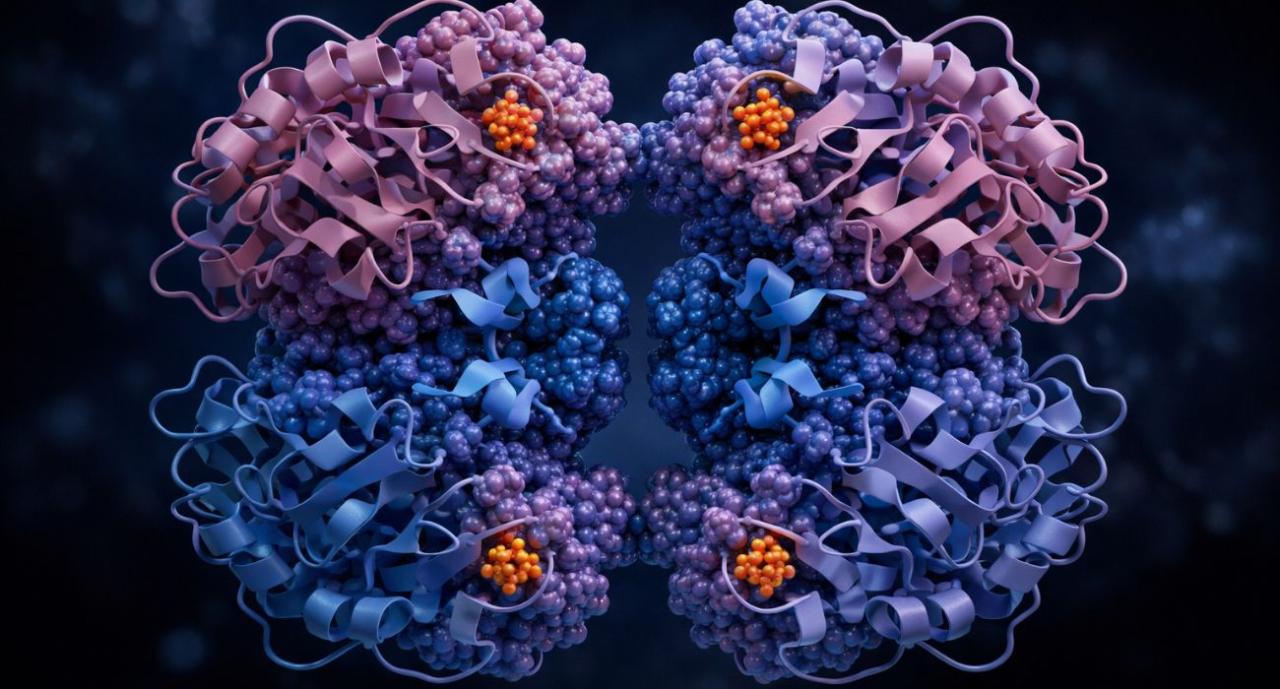 PKA enzyme complex
The Dutch Mystery and Binational Cooperation
Research at Ilouz's lab took a dramatic turn when a group of physicians from the Netherlands identified a family suffering from mysterious, hereditary neurodegenerative symptoms. "They discovered specific gene mutations in R1β, the regulatory unit that inhibits the enzymes," recalls Dr. Ilouz. Armed with the three-dimensional structure she had decoded, she began to study the mutation. "The interaction between the units composing the enzymes needs to fit like a hand in a glove, and this mutation was simply 'pushing' the sections apart, preventing them from connecting."
The tragedy is the timing. "We discovered that this mutation simply accelerates the aging processes that happen to all of us at an older age. However, among these patients, everything began accelerating as early as 45 years of age," Ilouz describes. "Young people begin to exhibit signs of accelerated aging: their memory weakens, learning takes more time, and effort is needed to retrieve simple information, such as 'where did I leave the keys?'"
The symptoms of the new disease, defined by Dr. Ilouz, NLPD-PKA, include severe motor problems, a stooped gait, and memory impairment. To research it, Dr. Ilouz studied brain tissue from deceased patients in the Netherlands, as well as mouse models carrying the human mutation. "It is incredible how similar a mouse’s brain is to a human’s. We inject them with material that simulates activity to see how the brain behaves in active versus passive states."
The identification of this new disease, along with insights into the next stages of research, recently earned Dr. Ilouz a prestigious research grant from the U.S.-Israel Binational Science Foundation (BSF), in conjunction with Dr. Rodrigo Maillard from Georgetown University. Together, the two laboratories are combining their expertise to crack the molecular mechanisms leading to accelerated aging.
The Disease that Accelerates Time: Enormous Potential for Treating Aging
One of the more surprising findings in the research is the link to aging in general. "We noticed that all the symptoms we found in the sick mice were occurring naturally over time, even in healthy mice."
This is where the Dangoor Center's personalized medicine approach is vital. There are currently only 12 diagnosed patients worldwide who have undergone full genetic sequencing. The disease may be rare, but its potential impact is enormous. While large drug companies often shy away from "orphan diseases" for economic reasons, this case is different.
"Researching old age is too big because there are too many processes involved," explains Dr. Ilouz. "But when we have a disease that stems from damage to a specific enzyme, we have an anchor. If we can learn to fix R1β in these patients, we can draw conclusions for everyone. The solution to a rare disease may lead to a treatment that slows down aging for the entire population."
The research is already showing potential beyond brain health. Dr. Ilouz is applying insights regarding PKA to prostate cancer research, working closely with physicians and patients. "The link between the clinic and the laboratory is critical," she explains. "The data I receive from patients directly influences what we do in the lab."
Science in the Shadow of War: "Unscientific Comments"
As a researcher who established and led the Science Abroad Center in San Diego, Dr. Ilouz is sensitive to the status of Israeli science. Currently, she is feeling the challenges stemming from the repercussions of the war within academia. "I had an article rejected, and when I read through the comments, it was absolutely insane. It wasn't scientific at all," she relates bluntly. "I explained simple things to them that they supposedly 'didn't understand.' It's hard not to think about anti-Semitism when you can't find a scientific reason to reject a paper."
Nevertheless, she continues to present her work at international conferences, where researchers are excited by her interdisciplinary approach, which spans biochemistry, genetics, structural biology, and advanced microscopy. "People often study only one field, and consequently, they don't have the big picture. Without it, it's much more difficult to pinpoint the path to a solution."
The Vision: Living with Dignity
In the future, Dr. Ilouz aspires to decode the entire spectrum, from rare diseases that cause developmental problems in children to neurological issues leading to neurodegenerative diseases and aging itself. "It's all interconnected," says Ilouz. "What interests me most is reaching a solution that will turn these devastating diseases into conditions that can be lived with, in dignity."
Curiosity, as she sums up, is the main motive behind her research. "What excites me most is finding an answer, and every answer leads to ten new questions. Seeing where we were four years ago with the conjectures we had, and what we are discovering today and where we have made breakthroughs, it’s truly a wonderful process."
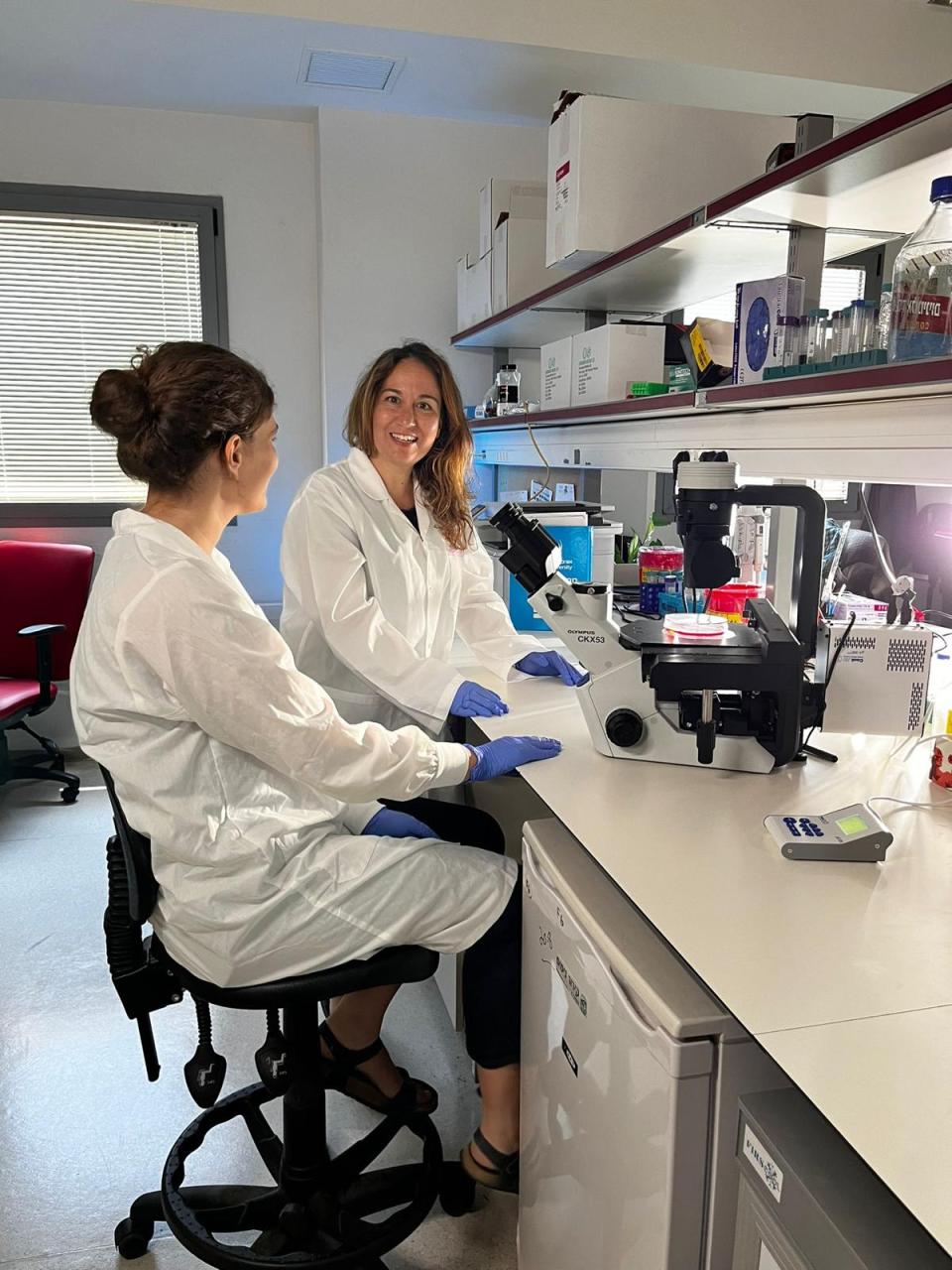 Dr. Ronit Iluz in her laboratory at the Dangoor Center, Bar-Ilan University.
Last Updated Date : 02/03/2026