


Transmigration / Diapedesis
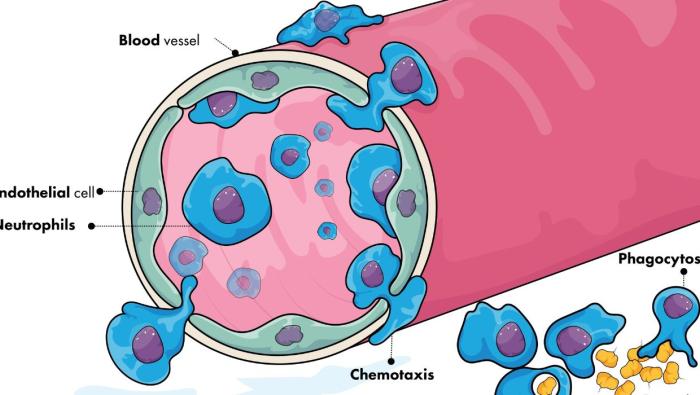
Transmigration, also known as diapedesis, is an essential process in the immune system in which white blood cells (leukocytes) move from the blood vessels into tissues affected by inflammation or infection. The process begins when white blood cells adhere to the vessel wall, crawl along the endothelial cells (the inner lining of the blood vessels), and pass through the blood vessel barrier into the damaged tissue. Without this process, the immune system would be unable to reach sites of infection or injury to fight pathogens and repair damage.
How does the process of transmigration occur?
Transmigration takes place mainly in small post-capillary venules, where blood flow forces are minimal. The movement can occur in two ways: through the gaps between endothelial cells (the paracellular route) or directly through the body of the endothelial cell itself (the transcellular route). In both cases, endothelial cells play an active role – they form arm-like structures that surround the white blood cell and help it pass through. After crossing the endothelium, the white blood cell must also pass through the basement membrane beneath the blood vessel, and only then can it enter the inflamed interstitial tissue.
What is reverse transmigration, and how does it affect the body?
Reverse transmigration is a process in which white blood cells that have already moved into the tissue return to the bloodstream. This process was once thought to be nearly impossible, but recent studies show that it does occur. In the lab of Prof. Arie Lev Gruzman at the Dangoor Center, for example, both forward and reverse transmigration are used in the groundbreaking drug he developed, which treats hundreds of autoimmune diseases. Reverse transmigration is a double-edged sword: on the one hand, it can help resolve local inflammation by removing excess cells from the site of injury; on the other hand, neutrophils that re-enter the bloodstream can spread inflammation to distant organs such as the lungs, heart, and liver, causing secondary damage.
Last Updated Date : 26/04/2026