




Peroxisome
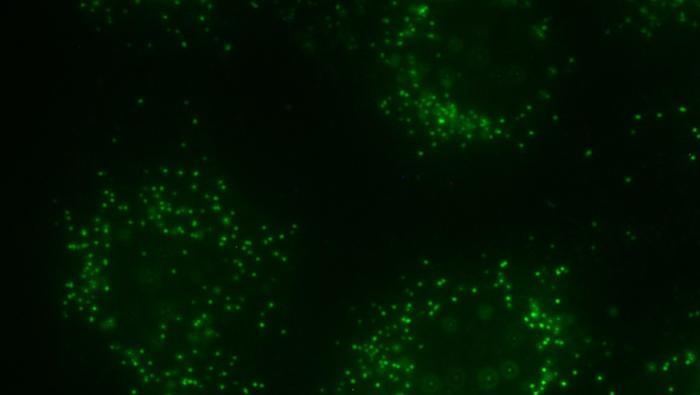
A peroxisome is an organelle, a tiny membrane-bound structure within a cell that performs specific functions. One of its main roles is to shorten very-long-chain fatty acids so the cell can process them further. It also helps produce plasmalogens, fats important for cell membranes, and bile acids, which aid in fat digestion.
Some of the breakdown processes within peroxisomes produce hydrogen peroxide. In small amounts, it can help transmit signals within the cell, but when it accumulates, it can damage proteins, cell membranes, and DNA. An enzyme called catalase breaks it down into water and oxygen, helping maintain normal levels. The name “peroxisome” comes from hydrogen peroxide, which is both produced and broken down within the organelle.
Peroxisomes are particularly important for the normal functioning of the nervous system and liver. If they do not form properly, or if a protein needed for their function is impaired, certain fatty acids may accumulate and too little of some essential fats may be produced. This can lead to developmental delay, seizures, vision and hearing problems, or impaired liver function.
One example is a group of disorders known as Zellweger spectrum disorder. Its severe form causes low muscle tone and feeding difficulties in infancy, along with damage to several body systems, and is often life-threatening within the first year of life. Another well-known disease is X-linked adrenoleukodystrophy, which can affect the nervous system and adrenal glands.
To understand what goes wrong in these diseases, researchers examine which proteins are needed for peroxisome function and how defects in these proteins affect the cell. Dr. Einat Zalckvar of the Dangoor Center for Personalized Medicine studies diseases associated with this organelle. Her laboratory grows cells taken from patients and tests how they respond to drugs already approved for other diseases. This approach can identify drugs that might be suitable for treating a rare disease, which can then be tested to determine whether they are effective and safe for patients.
Frequently asked questions
1. What is a peroxisome?
A peroxisome is an organelle, a tiny membrane-bound structure within a cell that performs specific functions. It contains enzymes that break down very-long-chain fatty acids so the cell can process them further. Other enzymes help produce fats essential for cell membranes and break down hydrogen peroxide generated during the organelle’s activity.
2. What does a peroxisome do?
Peroxisomes participate in several processes involved in fat metabolism. They shorten very-long-chain fatty acids so the cell can break them down further, and help produce fats needed for cell membranes as well as bile acids. They also break down hydrogen peroxide generated during their activity, which can damage the cell if it accumulates.
3. What is the difference between peroxisomes and mitochondria?
Both organelles help process substances within the cell, but they have different roles. Mitochondria produce much of the energy the cell needs. Peroxisomes carry out the initial stages of breaking down very-long-chain fatty acids, among other functions. Once peroxisomes have shortened these fatty acids, mitochondria can break them down further.
4. Why is hydrogen peroxide produced in peroxisomes?
Some enzymes in peroxisomes use oxygen to break down substances, producing hydrogen peroxide in the process. Because its accumulation can damage the cell, peroxisomes also contain the enzyme catalase, which breaks it down into water and oxygen. Producing and breaking down hydrogen peroxide are part of the organelle’s normal activity.
5. Which diseases are associated with impaired peroxisome function?
Impaired peroxisome function can cause rare genetic diseases. In the group of conditions known as Zellweger spectrum disorder, several of the organelle’s functions are affected. Patients may experience developmental delay, vision and hearing problems, and liver damage. In X-linked adrenoleukodystrophy, very-long-chain fatty acids cannot enter peroxisomes to be broken down. Their accumulation can damage the nervous system and adrenal glands.
6. How is a peroxisomal disorder diagnosed?
Diagnosis is based on a combination of symptoms, laboratory tests, and genetic testing. Blood tests may reveal a buildup of very-long-chain fatty acids or changes in the levels of other substances processed by peroxisomes. Genetic testing can identify the affected gene and help establish a diagnosis.
7. Are peroxisomal disorders inherited?
Rare peroxisomal disorders, including Zellweger spectrum disorder and adrenoleukodystrophy, are caused by genetic changes and are inherited in most cases. Sometimes, however, a genetic change arises for the first time in an individual, so the disease can develop without a family history. Researchers are also investigating impaired peroxisome function in diseases that are not inherited, but its role in their development remains unclear.
8. Are there treatments for diseases caused by impaired peroxisome function?
Treatment varies by disease. For Zellweger spectrum disorders, it focuses mainly on managing symptoms and monitoring the function of affected organs. Specific treatments are available for some cases of cerebral adrenoleukodystrophy, and early diagnosis is important to determine whether they are suitable. Additional drugs are being studied.
Last Updated Date : 15/11/2026