


Type 1 diabetes
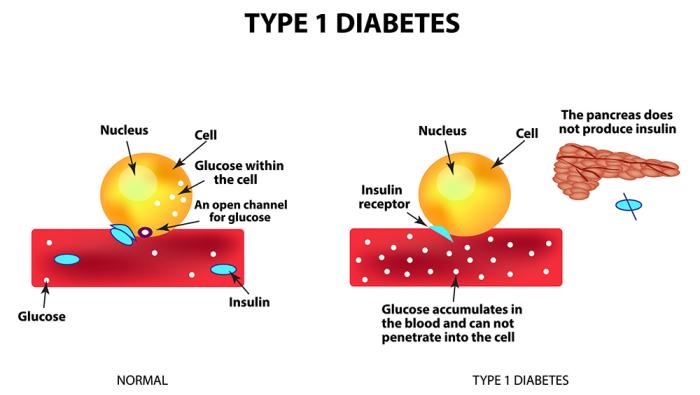
Type 1 diabetes is a chronic autoimmune disease in which the immune system mistakenly attacks the beta cells in the pancreas—the cells that produce insulin. Insulin is an essential hormone that enables glucose to move from the bloodstream into the body's cells, where it is used to produce energy. When the beta cells are damaged, the body produces little or no insulin, causing glucose to accumulate in the bloodstream instead of being properly absorbed by the cells. As a result, people with type 1 diabetes are completely dependent on externally administered insulin, delivered through injections or insulin pumps, and require continuous monitoring of their blood glucose levels.
The disease was once known as juvenile diabetes because it is often diagnosed during childhood, adolescence, or early adulthood. However, this name is not entirely accurate, since type 1 diabetes can also develop later in life. The causes of its onset are not yet fully understood, but it is known to result from a combination of genetic susceptibility and environmental factors that may influence the immune system, including certain viral infections.
Without appropriate treatment, a severe lack of insulin can lead in the short term to diabetic ketoacidosis (DKA)—a life-threatening condition in which the body breaks down fat at an accelerated rate, producing acidic substances called ketones that accumulate in the bloodstream. Over the long term, poorly controlled diabetes can damage blood vessels and nerves, leading to complications such as vision loss, kidney disease, nerve damage, heart disease, and stroke.
Treatment for type 1 diabetes is based on a combination of blood glucose monitoring, insulin therapy, an individualized diet, carbohydrate counting, and physical activity in accordance with medical guidance. Alongside existing treatments, researchers are investigating ways to address the underlying cause of the disease. At the Dangoor Center for Personalized Medicine at Bar-Ilan University, Dr. Ron Piran is studying ways to promote the regeneration of pancreatic beta cells, among other approaches, as a foundation for the development of future treatments for diabetes. Additional research by Dr. Piran and his group focuses on the role of the protein PAR2 in type 1 diabetes and its effects on beta cells and inflammatory processes in the immune system.
Frequently Asked Questions
1. What is type 1 diabetes?
Type 1 diabetes is a chronic autoimmune disease in which the immune system mistakenly attacks the beta cells in the pancreas—the cells that produce insulin. As a result of this damage, the body produces little or no insulin. Because insulin is essential for allowing glucose to move from the bloodstream into the body's cells, where it is used to produce energy, people with type 1 diabetes require ongoing insulin therapy and regular monitoring of their blood glucose levels.
2. What are the common symptoms of type 1 diabetes?
In type 1 diabetes, symptoms usually appear rapidly because the body quickly loses its ability to produce enough insulin and regulate blood glucose levels. Common symptoms include frequent urination, especially at night, increased thirst and dry mouth, increased hunger, fatigue, and weakness. Unexplained weight loss, blurred vision, slow wound healing, and recurrent infections may also occur. In severe cases, nausea, vomiting, abdominal pain, rapid breathing, or confusion may develop—signs that require immediate medical attention.
3. What is the difference between type 1 and type 2 diabetes?
In both types of diabetes, blood glucose levels become elevated, but the underlying cause is different. In type 1 diabetes, the immune system damages the pancreatic cells that produce insulin, so the body produces little or no insulin. This disease is not caused by a person's lifestyle, and treatment requires insulin therapy. In type 2 diabetes, the body usually still produces insulin, but the cells respond to it less effectively. This form of diabetes is more closely associated with age, body weight, overall health, and lifestyle factors such as diet and physical activity. As a result, lifestyle changes can be an important part of treatment.
4. Is type 1 diabetes an inherited disease?
Type 1 diabetes is influenced by genetic factors, but it is not inherited in a direct and predictable way, like eye color, for example. Certain genes associated with the immune system can increase the risk of developing the disease, but carrying these genes does not mean that a person will develop it. In most cases, type 1 diabetes results from a combination of genetic susceptibility and environmental factors, such as certain viral infections, which may trigger an immune response against the beta cells of the pancreas.
5. What is diabetic ketoacidosis, and what are its signs?
Diabetic ketoacidosis (DKA) is an acute, life-threatening complication that occurs primarily in people with type 1 diabetes. It develops when there is a severe lack of insulin, preventing the body from using glucose as its primary source of energy. Instead, the body begins breaking down fat at an accelerated rate, producing acidic substances called ketones. As ketones accumulate in the bloodstream, they can disrupt the body's normal acid-base balance, leading to nausea, vomiting, abdominal pain, deep and rapid breathing, fruity-smelling breath, confusion, and even loss of consciousness. This is a medical emergency that requires immediate treatment.
6. Which blood tests are used to diagnose type 1 diabetes?
Type 1 diabetes is diagnosed by a healthcare professional based on symptoms and blood tests that measure blood glucose levels. Common tests include a fasting blood glucose test, a random blood glucose test, and an HbA1c test, which reflects average blood glucose levels over the previous few months. To distinguish type 1 diabetes from other forms of diabetes, tests for autoantibodies associated with the autoimmune process may also be performed, along with a C-peptide test, which helps assess how much insulin the body is still producing. However, no diagnosis should be based on a single test alone, and test results should not be interpreted without medical guidance.
7. How can type 1 diabetes be managed and kept under control?
Managing type 1 diabetes requires a combination of insulin therapy, regular blood glucose monitoring, an individualized diet, carbohydrate counting, and physical activity in accordance with medical guidance. Blood glucose levels can be measured through blood tests, a blood glucose meter (glucometer) that uses a finger-prick blood sample, or a continuous glucose monitoring (CGM) sensor. Alongside these established methods, researchers at the Dangoor Center at Bar-Ilan University are investigating a non-contact method for measuring blood glucose using a laser, a camera, a magnetic field, and artificial intelligence. The goal of this research is to enable a more convenient and less invasive method of glucose monitoring in the future. For now, however, diabetes management and monitoring continue to rely on established medical methods.
8. Can type 1 diabetes be prevented?
At present, there is no proven way to completely prevent the onset of type 1 diabetes. However, efforts are underway to identify people at risk at an early stage, primarily through testing for autoantibodies, as well as through treatments designed to delay disease progression in its early stages. In recent years, new immunotherapy treatments have been approved in several countries to delay the onset of the clinical stage of the disease in people who have already shown early signs of the underlying autoimmune process.
Last Updated Date : 27/07/2026